

Key takeaways
- Manual pallet jack: Lower cost and nearly no maintenance for occasional use.
- Electric stacker: Lifts pallets onto racks, which a standard pallet jack cannot do.
- Used or reconditioned commercial walkie: Can offer premium-brand build at lower cost, provided the battery and service history are documented.
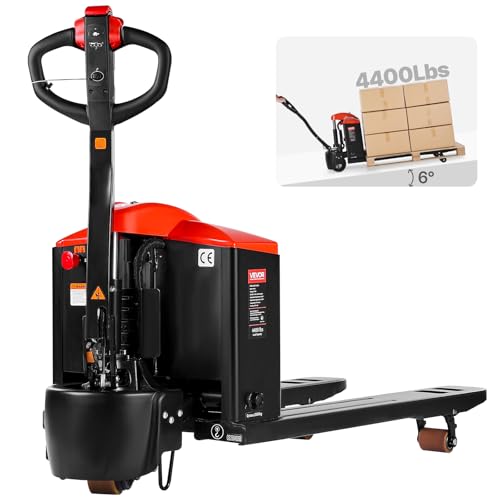
For light-duty shops, small warehouses and loading docks that move loads up to about 3,300 lb, a walkie electric pallet jack in the Vestil or budget lithium class is the sensible fit; for daily, multi-shift work with loads around 4,500 lb, a Crown WP 3200 series or Raymond 8210 walkie is the commercial-grade choice; and for long runs or loads near 6,000 lb, a stand-up rider such as the Crown PR 4500 saves the operator walking. Capacity, battery type, fork size and the operator’s training all matter more than brand loyalty, which is the logic of this guide.
Our top picks



As an Amazon Associate we earn from qualifying purchases at no extra cost to you.
At a Glance: Electric Pallet Jack Options
The specs below come from the makers’ listings and from 2026 equipment roundups; confirm exact ratings on the data plate and in the manual before purchase, because options and configurations vary by order.
| Model / class | Best for | Stated specs | Limits |
|---|---|---|---|
| Vestil EPT-2748-33 | Small warehouses, shops, light dock work | 3,300 lb capacity, 48 x 27 inch forks, 24V, roughly eight hours per charge (roundups) | Lower capacity than commercial walkies |
| Vestil EPT-2547-30 | Lighter loads with fingertip controls | 3,300 lb, fingertip raise/lower buttons | Same capacity ceiling |
| Budget lithium walkies (Tory Carrier EPJ3300, APOLLOLIFT A-1034) | Occasional use, low budget | Mostly 3,300 lb rated; lithium battery | Less service network; durability under heavy daily use is not established |
| Crown WP 3200 series | Daily dock work | 4,500 lb, 24V, forks 36 to 48 inches, battery options from 72 to 300 amp-hours (reviewer reports) | Premium tier |
| Raymond 8210 | Frequent use with fine slow-speed control | 4,500 lb rating (roundup) | Premium tier |
| Crown PR 4500 stand-up rider | Long runs, heavy loads | 6,000 lb, 24V | Larger machine, rider training needed |
| Crown PW 3500 series | Heavy-duty applications | 8,000 lb, 24V | Highest cost, size |
Walkie, Rider or Manual?
A manual pallet jack is the cheapest and simplest tool, but it relies on the operator’s strength to pull every load. An electric walkie adds a motor for travel and lift, so it makes sense once you move many pallets a day, haul loads over long distances, work on slopes or want to reduce strain. A stand-up rider goes further, letting the operator ride instead of walk, which matters in large facilities.
The crossover point is practical rather than numeric. If you move a handful of pallets a week, a manual jack is usually enough. If you move dozens a day, or pallets weigh more than the operator can safely push, electric is worth considering. Reviewers note that manual models like the Crown PTH 50, rated at 5,000 lb, are still popular for their durability and low maintenance, while stronger sources of fatigue are better solved with a powered unit.
Capacity: Match the Heaviest Pallet
Pick capacity from your heaviest regular load, not your average one, and leave a margin. Budget electric units are mostly rated at 3,300 lb, according to roundups. Commercial walkies move to 4,500 lb, riders to 6,000 lb and heavy-duty models to 8,000 lb. Remember that the rating applies to a load that is centered and evenly distributed on the forks. Uneven or tall loads reduce what is safe to lift. Never exceed the data plate rating.
Fork Length, Width and Pallet Fit
The common pallet footprint is 48 by 40 inches, and the usual fork length for it is 48 inches. Vestil lists 48 by 27 inch forks on one model, and Crown lists forks from 36 to 48 inches on the WP 3200 line. Shorter forks suit tight spaces and non-standard pallets but may not fully support a standard load. If your facility uses varied pallet sizes, check that the fork width and tip design will enter the pallet without damage. Also measure aisle width and turning radius; a long fork or large body needs more room.
Battery: Lead-Acid or Lithium
Lead-acid
Traditional lead-acid batteries are lower in upfront cost and widely supported, but they need watering, ventilation and a charging routine, and they are heavy. They may suit facilities with maintenance staff and a dedicated charging area.
Lithium
Many budget electric jacks now use lithium batteries, which charge faster, need less maintenance and allow opportunity charging. The trade-off is higher cost on premium units and, for low-cost imports, less certainty about service and replacement parts. Runtime depends on the capacity of the pack; Crown lists battery options from 72 to 300 amp-hours on the WP 3200, while Vestil’s 24V unit is cited at roughly eight hours of use per charge. Real runtime depends on load weight, travel distance and temperature.
Charging safety is not trivial. Use only the charger supplied or approved by the maker, charge in a ventilated area, and never modify battery connections. If anything about the electrical system looks damaged or smells hot, take the unit out of service and call the manufacturer or a qualified technician. Do not attempt electrical repairs yourself.
Controls, Ergonomics and Safety Features
Look at the tiller handle design, grip position, speed control and braking behavior. Reviewers of the Raymond 8210 praise fine low-speed control, which helps when positioning pallets in tight areas. Fingertip raise and lower controls, as on a Vestil model, reduce hand fatigue. Check for an emergency reverse button, a dead-man or automatic braking feature, and a horn or indicator if the maker lists them. Operators should be trained, since powered pallet trucks in many workplaces fall under occupational safety rules for powered industrial trucks; consult your local safety regulations or safety officer for training requirements.
Budget Tiers
Budget
Entry-level lithium walkies at 3,300 lb suit light, occasional use. Because roundups offer little evidence on long-term durability or service for the lowest-cost brands, buyers should ask about warranty terms, parts availability and charger support before committing.
Mid-range
Vestil and similar makers fall into this range, giving a straightforward 24V walkie with 3,300 lb capacity for small and medium operations.
Premium
Crown, Raymond, Toyota and similar makers are cited by reviewers as the most reliable electric brands, with dealer service networks, higher capacities and options such as stronger batteries. They cost significantly more but are built for daily use.
Pick X If… Decision Table
| Pick this | If you… | Watch out for |
|---|---|---|
| Vestil 3,300 lb walkie | Run a small warehouse or shop with moderate daily volume | Capacity ceiling |
| Budget lithium 3,300 lb | Need an occasional-use unit and a low budget | Service and parts |
| Crown WP 3200 or Raymond 8210 | Work a dock daily with loads up to 4,500 lb | Higher cost |
| Crown PR 4500 rider | Cover long distances or heavy pallets | Training, space |
| Manual jack (Crown PTH 50 class) | Move few pallets with no need for power | Operator strain |
Maintenance and Ownership Notes
Inspect forks, wheels, hydraulics and the tiller before each shift, report leaks or abnormal noise, and follow the maker’s service schedule. Keep batteries charged within recommended ranges, store the unit indoors where possible and do not leave it on a slope. Ask the dealer about local service, since downtime from a missing part can cost more than a modest price difference.
Buying Checklist
Before ordering, write down your heaviest pallet, the pallet size you use most, the narrowest aisle, the floor surface and any ramps or dock plates the jack must cross. Ask the seller for the data plate rating, the charger type and its input voltage, the warranty on the battery and the motor, and where service is done locally. Confirm how long parts take to arrive. Ask whether training material or a manual in your language is supplied. If the unit will be used outdoors, ask whether the maker allows it, since rain and cold affect batteries and electronics. Treat any answer you cannot get in writing from the seller as unconfirmed.
Alternatives
- Manual pallet jack: Lower cost and nearly no maintenance for occasional use.
- Electric stacker: Lifts pallets onto racks, which a standard pallet jack cannot do.
- Used or reconditioned commercial walkie: Can offer premium-brand build at lower cost, provided the battery and service history are documented.
Frequently Asked Questions
How much weight can an electric pallet jack lift?
Budget walkies are usually rated at 3,300 lb, commercial walkies at 4,500 lb, riders at about 6,000 lb and heavy-duty models at 8,000 lb, according to roundups. Always use the rating on your unit’s data plate.
Is a lithium battery better than lead-acid?
Lithium charges faster and needs less upkeep, while lead-acid costs less upfront and is widely supported. The right choice depends on your usage pattern, charging area and maintenance resources.
Do I need training to operate one?
In many workplaces, yes, since powered trucks are covered by safety rules and employer training requirements. Check your local regulations and the maker’s manual.
How long does a charge last?
One 24V Vestil model is reported at about eight hours per charge, but real runtime changes with load, travel and battery condition. Larger packs on commercial models extend runtime.
Are cheap electric pallet jacks worth buying?
They can suit occasional light loads, but there is little independent evidence on long-term durability. Ask about warranty, parts and charger support, and avoid pushing them to heavy daily duty.
What fork length should I choose?
A 48 inch fork fits the standard 48 by 40 inch pallet. Shorter forks suit tight spaces or special pallets but may not fully support a standard load.








Write Your Review
No reviews yet. Be the first to share your experience!