

Key takeaways
- Choose a kitchen cart by measuring your floor and workflow first: it should be about as tall as your counters, narrow enough to leave a walking lane.
Choose a kitchen cart by measuring your floor and workflow first: it should be about as tall as your counters, narrow enough to leave a walking lane, and topped with a material that matches how you cook. Butcher block suits chopping and a warm look, stainless steel suits heat and heavy use, and stone, laminate or wood composite suit lighter duty and budgets.
A cart is only useful if it fits the room it lives in, and size mistakes are the most common reason people return them. This guide walks through measuring, top materials, storage layout and mobility, so you can match a cart to your kitchen before you start comparing styles and finishes.
Measure the Space Before Anything Else
Start with the footprint. Measure the open floor where the cart will sit, then subtract a walking lane. Many designers suggest leaving roughly three feet of clear path in a working kitchen, and a bit less in a small galley. If the cart cannot fit while leaving that lane, it will become an obstacle instead of an extra counter, and you will end up shoving it out of the way every time you cook.
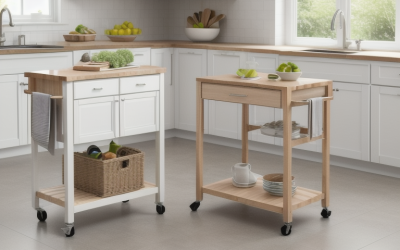
Next measure height. A cart that matches counter height, often around 36 inches, works as an extension of your prep area. A shorter cart may suit sitting or serving, while a taller one can work as a bar. Also measure doorways if you plan to move it between rooms, and check that drawers, dishwasher doors and oven doors can still open when the cart is parked beside them.
Choosing the Right Top Material
The top is where you spend most of your time, so it deserves more thought than the frame. Each material has a different strength, and the trade-offs are about care, heat and noise rather than looks alone.
Butcher block and solid wood
Wood tops are warm, quiet and forgiving on knives, and they can be sanded and re-oiled. They need regular conditioning and should not sit under standing water. Hot pans can scorch them, so use a trivet. Wood suits cooks who chop and knead directly on the cart and who do not mind a bit of seasonal care.
Stainless steel
Steel tops tolerate heat, wipe clean and resist stains, which makes them a good fit for busy or heavy-use kitchens. They can scratch and show fingerprints, and they can be noisy when dishes are set down. They look at home in a modern or commercial-style room and pair well with appliance finishes.
Stone, marble and granite
Stone tops add weight and a premium look. They are cool for pastry work. They can chip at the edges, and marble can stain with acids such as lemon juice or wine unless sealed. The weight also affects how easy the cart is to move, so a stone top suits a cart that stays put more than one that travels.
Laminate, composite and engineered wood
These budget-friendly options resist moisture and are easy to wipe, but they may chip or swell if water gets under the surface. They suit light prep, serving and storage. Look for sealed edges, since that is where cheaper models tend to cut corners, and avoid cutting directly on the surface.
Storage Layout and Features
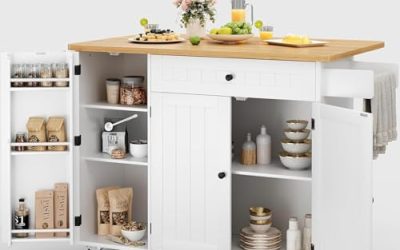
Think about what you want to hold. Open shelves keep frequently used items within reach but show clutter. Drawers hide small tools, while cabinets take larger pots and appliances. A towel rail, hooks or a spice rack help in tight kitchens, though each one adds width and can catch on clothing when you squeeze past.
Check how much weight the shelves can carry, especially if you plan to store a mixer or a stack of cast iron. Adjustable shelves give flexibility. If you will use the cart as a coffee or bar station, leave room for a tray and a few bottles rather than filling every space with cookware. A drop leaf or fold-down side can add counter space when needed and tuck away when it is not.
Mobility, Stability and Safety
Casters make a cart flexible, but they also make it wobble if poorly built. Look for locking wheels on at least two corners, ideally all four, so the cart stays put while you chop. Larger wheels roll more smoothly over thresholds and uneven floors. Check that the frame does not flex when you push on the top, since a racking cart can loosen joints over time.
For households with kids or pets, rounded corners and a stable base matter. Avoid placing heavy items on the top shelf of a light cart. When using a stove-adjacent cart, keep it clear of heat and cords, and follow any manufacturer guidance about heat limits. If the cart will hold a hot appliance, confirm that the top is rated for it.
Matching the Cart to How You Cook
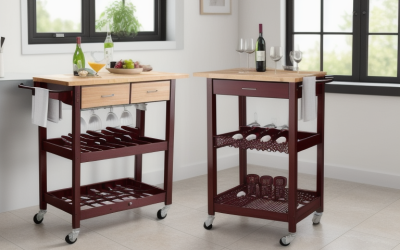
A baker who rolls dough every weekend benefits from a cool, smooth surface and a lower height, while a weeknight cook who mostly needs landing space for groceries cares more about shelves and casters. If you entertain, a cart that doubles as a drink station needs a durable top and room for glassware.
Renters often prefer a freestanding cart over a built-in island because it can move with them. If you rent, check floor protection: casters with soft treads are kinder to hardwood and tile, and felt pads or mats can protect fragile finishes under locked wheels.
Frame, Finish and Assembly
The frame decides how the cart ages. Solid wood and thick steel frames resist wobble, while thin tubing and particleboard panels can sag under weight or swell near a sink. Powder-coated or sealed finishes resist splashes better than bare surfaces, and a smooth, rounded edge is easier to clean than a seam where crumbs collect.
Assembly matters too. Many carts arrive flat-packed, and a design that needs many small screws can loosen over time. Tighten the hardware after the first few weeks, and keep the leftover fasteners in a labeled bag. If you plan to move apartments, favor a design that disassembles cleanly rather than one that is glued together.
Budget Tiers and What to Expect
At the budget tier, expect laminate or engineered tops, lighter frames and basic casters, which are fine for a small apartment or occasional use. Mid-range carts often add solid wood or steel tops and sturdier hardware. Premium carts offer thicker tops, locking casters on every corner and better storage layouts. Spend first on the top and the casters, since those take the daily wear.
Quick Comparison of Top Materials
| Top material | Heat tolerance | Care level | Best use |
|---|---|---|---|
| Butcher block | Low, use trivets | Needs oiling | Chopping and prep |
| Stainless steel | High | Low, wipe clean | Busy, heavy-use kitchens |
| Stone or marble | Moderate to high | May need sealing | Pastry and display |
| Laminate or composite | Low to moderate | Low | Light prep and serving |
Before You Buy
- Measure floor space and leave a clear walking lane.
- Match the cart height to your counters.
- Pick a top that fits your cooking habits and cleaning tolerance.
- Count the items you want to store and choose shelf types accordingly.
- Look for locking casters and a rigid frame.
- Check delivery dimensions against your doorways, which is useful in 2026 or any year.
Related guides
- Rolling Cart For Kitchen With Butcher Block Top
- Lightweight Folding Shopping Carts For Seniors
- How To Choose A Wagon Cart For Garden Vs Beach Use
Frequently Asked Questions
What size kitchen cart is best for a small kitchen?
Choose a narrow footprint that leaves a clear walking lane, and consider models with drop leaves or fold-down sides. Always measure your space first and mark the footprint on the floor with tape.
Is butcher block or stainless steel better?
Neither wins on every point. Butcher block is gentle on knives and warm to the eye, while stainless steel handles heat and cleans easily. Pick the one that matches how you cook.
Do I need locking casters?
Yes, if you will chop or knead on the cart. Locking wheels stop it from rolling while you work, and they add safety when the top carries hot or heavy items.
Can a kitchen cart replace a countertop?
It can add working surface, but it will rarely match a fixed counter for strength or height. Use it as a supplement rather than a substitute.
More from Amazon
Programs that pair well with the guide above. Offers and eligibility are set by Amazon and may change.
Free shipping on eligible items, Prime Video and more. Eligible new members can start with a free trial.
Start a Prime free trialAudiobooks and podcasts to listen to on the go. Eligible new members can start with a free trial.
Try Audible freeAd-free music streaming. Eligible new subscribers can start with a free trial.
Try Music Unlimited freeA free business account with business pricing and bulk-buying tools for work, shop or home office.
Create a business accountAs an Amazon Associate we earn from qualifying purchases.

Write Your Review
No reviews yet. Be the first to share your experience!