

Key takeaways
- The 4 best inverter dehumidifiers for large basements in November 2026, compared by capacity, drainage, noise, and smart controls for damp below-grade spaces.
A large basement does not dry out the way a bedroom does. Concrete walls wick moisture in from the soil, cool air holds less water before it condenses, and a unit that is too small will run all day without ever pulling the room down to a dry level. The real decision is not which brand looks best. It is whether the compressor can vary its speed to match the load, whether the daily capacity fits the size and dampness of the space, and whether the water has somewhere to go without daily bucket duty.
This guide is for homeowners with a finished basement that doubles as living space, owners of unfinished basements fighting musty air and damp stored goods, and anyone replacing a fixed-speed unit that cycles loudly through the night. Every pick below is an inverter model sized for a large basement, chosen from the product names and specifications shown on its Amazon page, so you can compare capacity, drainage, and controls on the same terms.
Quick Picks
As an Amazon Associate we earn from qualifying purchases.
| Product | Best for | Key spec from title |
|---|---|---|
| Midea Cube 50 Pint Dehumidifier | Large finished basements needing steady, quiet drying | 50 pints per day, rooms up to 4,500 sq. ft. |
| Midea Cube 50 Pint Dehumidifier with Built-in Pump | Basements with no floor drain below the unit | Built-in pump, 50 pints per day |
| Midea Cube 35 Pint Dehumidifier | Mid-size basements where a 50-pint unit is oversized | 35 pints per day, rooms up to 3,500 sq. ft. |
| LG PuriCare 50-Pint Dehumidifier with Pump and Wi-Fi | App-controlled drying from a major appliance brand | Smart Inverter compressor, 50 pints per day |
How to Choose
Match capacity to the basement, not the headline square footage
Square-footage ratings on dehumidifier listings assume a moderately damp room, so a very wet basement needs more capacity than the headline number suggests. A 50-pint unit is the usual starting point for a large basement, while a 35-pint unit suits a mid-size space or a basement that is damp rather than wet. Measure the floor area, note ceiling height, and be honest about seepage, laundry, and stored cardboard, which all add moisture. If the space regularly smells musty or shows condensation on walls and pipes, size up rather than down, because an undersized unit runs constantly and still leaves the air damp.
Understand what the inverter compressor actually changes
A fixed-speed compressor is either fully on or fully off, so it blasts cold air, shuts down, and restarts as humidity drifts back up. An inverter compressor varies its speed to hold a steadier humidity level, which means fewer hard starts, less temperature swing, and quieter running at partial load. That matters in a basement used as a bedroom, office, or playroom, where cycling noise carries through the floor. It also matters for running costs over a humid summer, since the unit spends more time idling at low speed instead of repeatedly starting at full draw.
Plan drainage before you buy, not after
A dehumidifier that fills its bucket every few hours becomes a chore, and a large basement can fill a small tank surprisingly fast. Gravity drainage through a hose works only when a floor drain, sink, or sump sits below the unit, so check the height of the drain before choosing a gravity-only model. A built-in pump pushes water upward to a sink or out a window, which opens up placement options in basements with no low drain. If you choose a bucket-only setup, look at tank volume and whether the unit stops cleanly when full.
Check cold-temperature behaviour, noise, and controls
Basements run cooler than upstairs rooms, and many dehumidifiers lose capacity or ice up when the air drops toward the low sixties. Auto-defrost keeps the coils clear in a cool basement, and auto-restart restores your settings after a power cut instead of leaving the unit idle. Noise matters more than the spec sheet suggests, because a basement unit often sits under a bedroom; a model with several fan speeds lets you trade airflow for quiet at night. Smart control through an app is worth having when the unit lives two floors down and you want to check humidity without walking downstairs.
The 4 Best Options
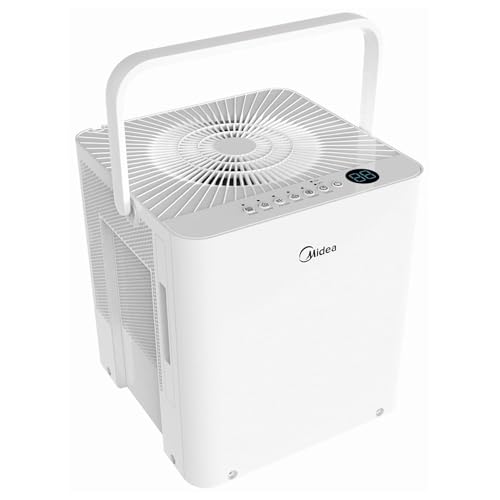
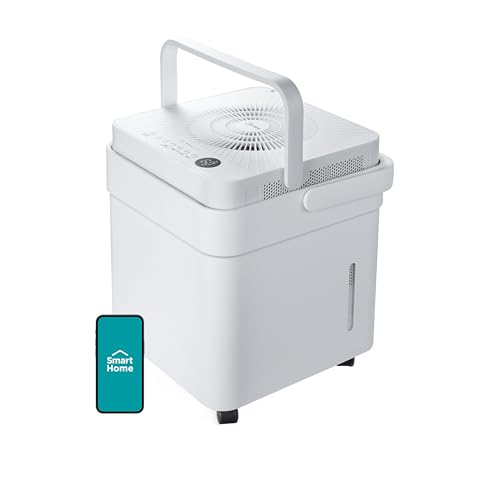
Midea Cube 50 Pint Dehumidifier
The Cube 50 is the straightforward pick for a large basement that needs steady drying without a pump. Its lift-and-twist body extends while running and nests down for storage, and the oversized tank means far fewer trips to empty it than a conventional unit of the same capacity. Wi-Fi control through the app lets you set a target humidity and check the tank from upstairs, and the drain hose in the box covers continuous gravity drainage when a floor drain is available.
Specs
- Dehumidification capacity: 50 pints per day
- Coverage: rooms up to 4,500 sq. ft.
- Humidity range: 35% to 85%
- Water tank: 4.2 gallons
- Drain hose included for continuous gravity drainage
- Smart control through the SmartHome app, works with Alexa and Google Assistant
- Auto restart and auto-defrost functions
- ENERGY STAR certified
Best for: Large finished basements where steady, quiet drying matters more than a pump.
Watch out for: Gravity drainage needs a drain below the unit, since this version has no built-in pump.
Midea Cube 50 Pint Dehumidifier with Built-in Pump
This is the same 50-pint Cube with a pump added, and that single change solves the most common basement problem: a floor drain that sits above the unit or does not exist at all. The pump pushes collected water upward to a sink or out a window, so the unit can run for weeks without anyone touching a bucket. Everything else carries over, including the large tank, the lift-and-twist body, and app control, which makes it the easiest version of the Cube to live with in an unfinished basement.
Specs
- Dehumidification capacity: 50 pints per day
- Coverage: rooms up to 4,500 sq. ft.
- Built-in pump for continuous drainage
- Water tank: 4.2 gallons
- Drain hose included
- Smart control through the SmartHome app, works with Alexa and Google Assistant
- Auto restart and auto-defrost functions
- ENERGY STAR Most Efficient 2022
Best for: Basements with no usable floor drain, where water must be pushed uphill to a sink or window.
Watch out for: Confirm the pump hose routing and drain height in your basement before ordering, since pump lift has practical limits.
Midea Cube 35 Pint Dehumidifier
The 35-pint Cube is the right size when a 50-pint unit would be overkill: a mid-size basement, a partially finished space, or a basement that is damp rather than actively wet. It keeps the same lift-and-twist body and oversized tank as its larger sibling, so it still runs far longer between emptying than a conventional small unit. Lower wattage and three fan speeds make it a calmer presence in a basement used as a bedroom or office, and the included drain hose covers continuous drainage where a low drain exists.
Specs
- Dehumidification capacity: 35 pints per day
- Coverage: rooms up to 3,500 sq. ft.
- Humidity range: 35% to 85%
- Water tank: 4.2 gallons
- Wattage: 314 watts
- Fan speeds: 3
- Drain hose included for continuous gravity drainage
- Smart control through the SmartHome app, works with Alexa and Google Assistant
- Auto restart and auto-defrost functions
- ENERGY STAR Most Efficient 2021
Best for: Mid-size basements and damp-but-not-wet spaces where a 50-pint unit would cycle too often.
Watch out for: A very wet large basement will overwhelm this capacity, so measure dampness honestly before sizing down.
LG PuriCare 50-Pint Dehumidifier with Pump and Wi-Fi
The LG PuriCare is the major-brand alternative in this short field, built around a Smart Inverter compressor that varies speed instead of cycling on and off. The built-in pump handles uphill drainage, Wi-Fi through the LG ThinQ app covers remote control and full-tank alerts, and a washable filter keeps dust out of the coils. It is a heavier, more conventional cabinet than the Cube models, but buyers who want an established appliance brand with app control will find it the most familiar option here.
Specs
- Dehumidification capacity: 50 pints per day
- Coverage: rooms up to 2,000 sq. ft.
- Compressor: Smart Inverter compressor
- Built-in drain pump with continuous drain
- Water tank: 13.3 pints
- Wi-Fi control through the LG ThinQ app
- Fan speeds: 2
- Power rating: 115V / 60Hz, 545 watts
- Washable air filter and automatic shut-off
- ENERGY STAR certified
Best for: Buyers who want a major-brand inverter unit with a pump and app control.
Watch out for: The tank is much smaller than the Cube models, so plan on pump or hose drainage rather than bucket duty.
Which One Fits Your Situation
A finished basement used as living space
Pick the Midea Cube 50 Pint Dehumidifier. Its variable-speed compressor holds humidity steady without the loud on-off cycling that carries through a floor into bedrooms above, and the large tank plus gravity hose keep it running quietly in the background. App control means you can check humidity from the living room instead of walking downstairs, and the nested design lets the unit shrink away when the dry season arrives.
An unfinished basement with no floor drain
Pick the Midea Cube 50 Pint Dehumidifier with Built-in Pump. Gravity drainage is useless without a low drain, and this is the only pick here that pairs full 50-pint capacity with a pump that pushes water up to a sink or out a window. The large tank is a backup rather than the main plan, so the unit can run unattended for long stretches in a space nobody visits daily.
A mid-size basement that is damp, not wet
Pick the Midea Cube 35 Pint Dehumidifier. A 50-pint unit in a modest space short-cycles and wastes energy, while this model matches the load and runs at lower draw with three fan speeds to choose from. It keeps the same large tank and drain hose as the bigger Cube, so you give up capacity, not convenience, and the lower running draw suits a basement that only needs steady background drying.
A buyer who wants a major brand and app control
Pick the LG PuriCare 50-Pint Dehumidifier with Pump and Wi-Fi. Its Smart Inverter compressor, built-in pump, and ThinQ app cover the same ground as the Cube models with the backing of an established appliance maker. Before ordering, confirm current Amazon availability, since this model has shown out-of-stock signals on trackers, and lean on the pump or hose rather than the small tank.
Common Mistakes
- Buying by square-footage rating alone while ignoring how wet the basement actually is, which leaves an undersized unit running all day.
- Choosing a gravity-drain model when the only drain sits above the unit, then discovering the hose cannot push water uphill.
- Assuming every dehumidifier is an inverter model, when most budget units still use fixed-speed compressors that cycle noisily.
- Placing the unit in a corner with blocked airflow, which starves the intake and makes even a large unit underperform.
- Skipping the humidity target and running the unit on continuous dry, which over-dries the air and wastes energy.
Frequently Asked Questions
What makes an inverter dehumidifier different from a standard one?
An inverter dehumidifier uses a variable-speed compressor that adjusts its output to match the humidity load, instead of switching fully on and off. That holds room humidity steadier, reduces the noise of repeated restarts, and lets the unit idle at low speed once the room approaches its target. In a large basement, that steadier behaviour matters because the space stays damp for months at a time.
How many pints per day does a large basement need?
A large basement usually needs a 50-pint unit under the current DOE rating, and a very wet one may need more capacity or a second unit for separate zones. A 35-pint model suits a mid-size basement or one that is only mildly damp. Judge by signs of moisture, such as musty smell, condensation, and damp stored goods, rather than floor area alone.
Can I drain an inverter dehumidifier without emptying a bucket?
Yes, when the setup allows it. A gravity hose drains continuously into a floor drain or sump below the unit, while a built-in pump pushes water upward to a sink or out a window. Both options need the right drain height and a hose route without kinks. Without either, the bucket must be emptied by hand, so tank size becomes important.
Do inverter dehumidifiers work in cold basements?
They can, but cold air reduces any dehumidifier’s capacity and can ice the coils. Look for auto-defrost, which clears frost before it blocks airflow, and expect slower moisture removal below the low sixties. Keep the unit away from cold exterior walls, give it clear airflow on all sides, and set a realistic humidity target rather than the lowest setting.
More from Amazon
Programs that pair well with the guide above. Offers and eligibility are set by Amazon and may change.
Free shipping on eligible items, Prime Video and more. Eligible new members can start with a free trial.
Start a Prime free trialAudiobooks and podcasts to listen to on the go. Eligible new members can start with a free trial.
Try Audible freeAd-free music streaming. Eligible new subscribers can start with a free trial.
Try Music Unlimited freeA free business account with business pricing and bulk-buying tools for work, shop or home office.
Create a business accountAs an Amazon Associate we earn from qualifying purchases.

Write Your Review
No reviews yet. Be the first to share your experience!