

A single-wheel steel wheelbarrow with a pneumatic or flat-free tire suits most homeowners who move soil, mulch and gravel, a two-wheel poly or steel model suits anyone who values stability over tight turns, and a lightweight poly tray suits gardeners who mostly carry plants, compost and leaves. The right answer depends on the load you carry, the ground you cross and how often you use the barrow, so this guide sorts the common current options by those three questions and by budget tier.
Our top picks
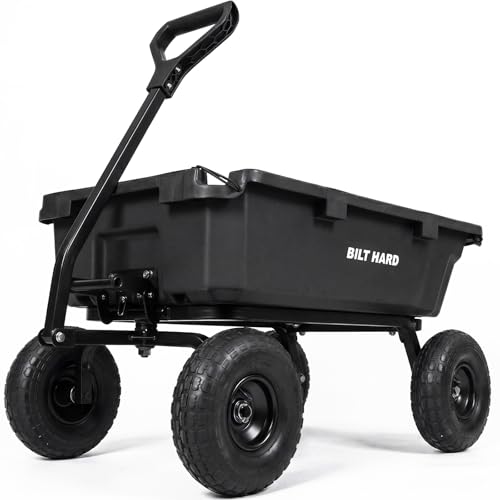 BILT HARD 900 lbs Poly Garden Dump
- All‑Terrain Pneumatic Tires: Equipped with 10‑inch pneumatic tires,…
- Flexible Capacity Expansion: Featuring innovative side expansion slots,…
- Heavy-Duty Construction: Built with a spacious, heavy-duty poly…


As an Amazon Associate we earn from qualifying purchases at no extra cost to you.
At a Glance: Wheelbarrow Types and Example Models
The table below groups the models that independent roundups keep naming. Capacity figures are the makers’ stated tray volumes as reported by outlets such as Reviewed and Trees.com; always confirm the exact load rating on the product label you are buying.
| Type / example model | Best for | Key stated features | Limits |
|---|---|---|---|
| True Temper 6 cu. ft. steel, flat-free tire | General yard and garden jobs | Steel tray, steel handles, comfort grips, flat-free tire (maker listing) | Steel can rust if the paint wears; some owner reports mention rust after a couple of years |
| Jackson M6T22 (6 cu. ft.) | Heavier, repeated loads of soil and stone | Painted stamped-steel tray, single air-filled wheel, H-brace reinforcement described by reviewers | Heavy to push when empty and to dump when full |
| True Temper 6 cu. ft. poly, Total-Control style | Gardeners who want a rustproof tray | Poly tray, pneumatic tire; HGTV names it a top plastic pick for maneuverability | Poly can crack under hard impact or sharp stone loads |
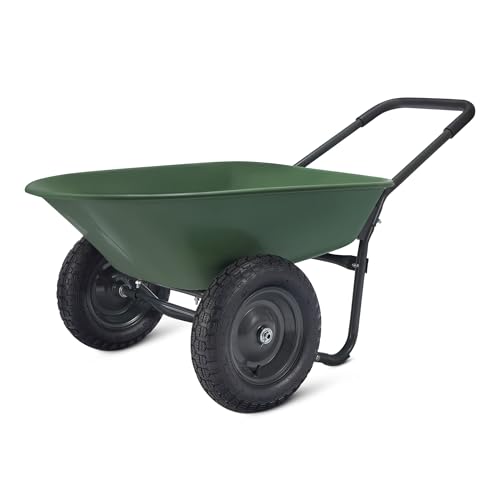
| Marathon Dualwheel Yard Rover | Stable loads on soft ground | Two wheels spread the weight and resist tipping | Wider, harder to steer through narrow gates |
| Husky dual-wheel poly | Budget to mid-range two-wheel use | Two-wheel poly design noted by HGTV as performing well | HGTV reports it was less durable and less maneuverable than its top pick |
| True Temper steel with dual wheels | Full loads of wet material | Steel tray on two wheels, listed by roundups as a best two-wheel option | Handles could use more padding, according to one roundup |
Single Wheel or Two Wheels?
This is the first decision, and it matters more than tray material. A single-wheel barrow concentrates the load over one contact point, which makes it easy to steer around beds, up ramps and through gates. The trade-off is balance: the operator carries part of the weight through the handles, and a full tray of wet soil can tip sideways on a slope. Reviewers who favor two-wheel designs make exactly this point: with a full load, a single-wheel model becomes hard to maneuver, and a second wheel removes much of the balancing effort.
A two-wheel barrow stands on its own and carries heavier loads with less strain on wrists and shoulders. It is also less likely to sink into soft turf because the weight is shared between two tires. Where it loses is turning radius and width. If your paths are narrower than the wheel track, or you need to cut tight corners between raised beds, a single wheel remains the practical choice. Some single-wheel steel models are sold with a conversion kit to add a second wheel later, which the maker of one True Temper model lists as an option and which is worth considering if your needs may change.
Tray Material: Steel Versus Poly
Steel trays
Steel is the traditional choice for concrete, gravel, bricks and rubble. A stamped, one-piece steel tub with reinforced ribs, like the one reviewers describe on the Jackson 6 cubic foot model, resists dents and does not flex under heavy point loads. The downside is weight and corrosion. If paint chips and the barrow is left outside wet, rust follows. Rinse after wet or salty loads, dry it, store it under cover and touch up scratches with rust-resistant paint.
Poly trays
Poly is lighter, does not rust and is easier to rinse clean after compost, manure or wet mulch. It is a sensible pick for gardeners and for anyone who struggles with the weight of a steel tray. The main risk is impact and sharp loads: dropping heavy stone into a poly tray repeatedly can crack it, and long sun exposure can make the plastic brittle over the years. Storing it out of direct sun helps.
Tires: Pneumatic, Flat-Free and Solid
Pneumatic (air-filled) tires cushion the ride and roll over roots and ruts more easily, which reviewers prize on uneven ground. They need occasional pressure checks and can puncture. Flat-free tires, such as the one listed on the True Temper steel model, remove puncture worry and suit people who rarely maintain tools, though some users find them firmer over bumps. Check what the maker states for tire size, because a wider, larger-diameter wheel carries soft ground better than a narrow one.
Handles, Frame and Ergonomics
Handle shape affects fatigue more than most buyers expect. Look for grips you can hold with your wrists straight, enough length to keep the load close to your body, and a frame that does not flex when lifted. Steel handles are strong but cold and slick in winter; wooden handles are warm and replaceable but need protection from rot; comfort grips help during long jobs. A low center of gravity, which reviewers mention for the Jackson design, helps keep a loaded barrow from tipping.
Leg design also counts. Wide, stable legs that sit flat on lawn and gravel make loading and unloading easier. Short or narrow feet can sink into soil and wobble.
Budget Tiers and Trade-offs
Budget
Entry-level poly or thin-gauge steel barrows handle occasional garden duty such as moving leaves, planting soil and small mulch loads. Expect lighter-gauge frames and basic tires. Reviewers generally caution that very cheap models flex at the handle joints under full loads.
Mid-range
This tier covers the best-known 6 cubic foot steel and poly designs from True Temper, Jackson, Husky and Marathon. Here you generally get thicker trays, reinforced frames and either pneumatic or flat-free tires. For most households this is the sensible tier, because the parts that wear are replaceable and the build handles regular weekend projects.
Premium
Premium or contractor-grade barrows use heavier-gauge steel, larger wheels, stronger bracing and often replaceable components. They are worth it only if you move stone, wet concrete or soil weekly. For occasional use the extra weight is a drawback.
Pick X If… Decision Table
| Pick this | If you… | Watch out for |
|---|---|---|
| Single-wheel steel, 6 cu. ft. | Move soil, gravel and bricks on firm ground and want maneuverability | Rust, balance on slopes |
| Single-wheel poly | Garden mostly, store outdoors, dislike weight | Cracks from sharp stone |
| Two-wheel steel | Carry full wet loads or have limited wrist strength | Turning in narrow paths |
| Two-wheel poly | Want stability and a rustproof tray on a budget | Lower durability, as one HGTV comparison suggests |
| Flat-free tire version | Hate tire maintenance or work around thorns and nails | Firmer ride |
| Pneumatic tire version | Cross roots, ruts and uneven ground | Occasional inflation and punctures |
Fit, Size and Storage Notes
Measure the narrowest gate or path you use before buying. A typical two-wheel barrow is wider than a single-wheel model, and some are too wide for side gates. Also think about storage: steel barrows hang well on a wall hook, while larger two-wheel models need floor space. Rinse out after use, keep tires at the pressure printed on the sidewall, and oil the axle if the design has a greasable bearing. Never exceed the load rating the maker prints; overloading is the most common cause of bent frames and sprung tubs.
Safety is straightforward but worth stating. Lift with your legs, keep the load centered over the axle for a single wheel, avoid steep slopes with full loads, and wear gloves and closed shoes. People with back problems should lighten loads or choose a two-wheel design, and see a doctor if lifting causes pain.
Alternatives to a Standard Wheelbarrow
- Garden cart (dump cart): Four wheels, easy for one person to pull, and a tipping bed on many models. Good for large yards, but it needs open paths.
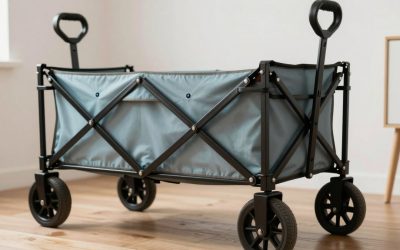
- Utility wagon: Better for hauling plants, tools and bags than loose soil, because the sides are lower and the fabric or plastic bed is less suited to rubble.
- Motorized or powered barrow: Worth considering for large properties, hills or users who cannot push heavy loads. These cost far more and need charging and maintenance.
Frequently Asked Questions
What size wheelbarrow is best for home use?
A 6 cubic foot tray is the size most roundups feature, and it fits the majority of home jobs. Smaller trays are lighter for gardening, while larger ones move more per trip but become heavy when filled with wet soil or gravel.
Is a steel or plastic wheelbarrow better?
Steel suits rock, concrete and rough work, while poly suits gardening and wet loads because it does not rust. Neither is better in every case, so choose by what you carry most. Steel needs rust care and poly needs protection from impact and sun.
Are flat-free tires worth it?
They remove puncture and inflation maintenance, which suits occasional users and thorny or debris-strewn ground. The trade-off is a firmer ride over bumps. If you cross roots and ruts often, many reviewers prefer air-filled tires.
Are two-wheel wheelbarrows easier to use?
They are more stable and reduce the balancing effort, which helps with heavy loads and for users with weaker wrists. They are wider and turn less sharply, so they are harder to use in narrow gardens.
How do I stop a steel wheelbarrow from rusting?
Rinse and dry it after wet or salty loads, store it under cover, and touch up chipped paint promptly. A light coat of rust-inhibiting paint on bare patches slows corrosion. Check the maker’s care guidance for the specific coating used.
How much weight can a wheelbarrow carry?
Capacity varies by model and by how the maker rates it, and tray volume is not the same as safe weight. Read the load rating on the label or manual and remember that a full tray of wet soil or gravel can weigh far more than a full tray of mulch.




Write Your Review
No reviews yet. Be the first to share your experience!