

Key takeaways
- Measure your vehicle’s cargo area before buying; the folded depth of a wagon is more important than its open size.
- Load the heaviest items low and near the axle, and keep tall stacks narrow to avoid tipping on turns.
- Pull wagons on a slight angle across soft patches rather than straight, and lift the front slightly if the front wheels dig in.
- Rinse the frame, wheels and fabric with fresh water after salt exposure and let everything dry fully before folding.
- Do not seat children in a cart unless the maker states it is rated for passengers. Most beach wagons are rated for gear.
- Inflatable tires need pressure that matches the maker’s guidance; overinflated tires lose some of the flotation that makes them useful on sand.
For most beach days, a collapsible wagon with four wide wheels such as the Mac Sports Heavy Duty is the practical pick, while anyone who has to cross long stretches of soft, dry sand should look at a two-wheel balloon-tire cart like the VEVOR or Big Kahuna style models. Anglers who also carry rods should consider a purpose-built fishing cart, and people who only walk a short boardwalk-to-sand distance can get by with a lighter fold-flat wagon. The right choice depends on three things: how soft the sand is, how heavy the load is, and how much trunk space you have.
Our top picks


As an Amazon Associate we earn from qualifying purchases at no extra cost to you.
Beach Carts at a Glance
| Cart | Best for | Key stated specs | Main limit |
|---|---|---|---|
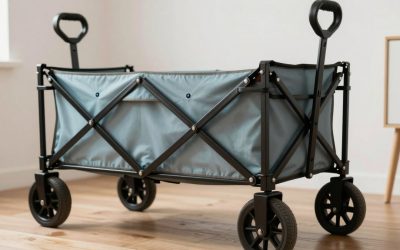
| Mac Sports Heavy Duty Collapsible Wagon | All-purpose family beach trips | Four wide wheels; about 150 lb rating; folds to roughly 10 inches thick; interior around 18 by 30 inches; Forbes lists a weight of about 24.5 lb | No wheel brakes; does not stand upright when folded |
| Mac Sports Collapsible Folding Utility Wagon | Lighter loads and mixed-surface use | Smaller rubber wheels than the heavy-duty version; lighter frame | Front wheels sit close together, so tight turns with a tall load can tip it |
| Rio Beach Wonder Wheeler | Chairs, a tote and a cooler | Folding frame; wide sand wheels; 100 lb capacity; beach chair rack and removable tote | Lower capacity than the big balloon carts |
| VEVOR 13-inch balloon cart | Long walks over soft sand | 13 inch TPU balloon wheels; 165 lb capacity; handle adjusts from about 29.5 to 49.2 inches | Two-wheel design means you carry some of the weight |
| Big Kahuna Beach Wagon | Large coolers and heavy gear | Aluminum frame with balloon wheels; 350 lb capacity; about 65 lb | Heaviest option in the OuterBanks roundup |
| Mighty Max Cooler Cart | Light, saltwater-friendly hauling | About 22 lb; 250 lb on hard ground but only 60 lb in soft sand per the listing | Soft-sand capacity is far lower than hard-ground capacity |
| Gorilla Carts fishing and marine model | Anglers | 13 inch all-terrain wheels; 200 lb; aluminum frame; rod holders and a bait tray | Specialized layout is more than a casual visitor needs |
Specs above come from the makers’ listings as relayed by outlets such as OuterBanks.com, Forbes and Outoria. Reviewers do not always agree: Forbes and several roundups rank the Mac Sports Heavy Duty as the best all-rounder, while Outoria reports that its wheels are not wide enough for very soft sand and prefers the lighter Mac Sports Collapsible in its own sand runs. That disagreement is a reminder that sand conditions vary from beach to beach.
What Actually Matters on Sand
Wheel width and diameter
Sand punishes narrow wheels because they sink and plow. Wide, soft wheels spread the load over a bigger contact patch. A 13-inch balloon tire is the common answer on dune-style beaches, and reviewers consistently say that carts with large inflatable or foam-filled wheels keep rolling when four-wheel wagons start to drag. Four-wheel wagons with wide plastic or rubber wheels do fine on packed, damp sand near the waterline but can feel heavy on the dry stretch near the dunes.
Two wheels versus four
Four-wheel wagons carry their own weight, so you pull rather than lift. They are also easier to load because they sit flat. Two-wheel carts tilt back onto the axle, which means the handle carries part of the load, but the large wheels roll over ruts and soft patches better. If your path from the car is under a hundred yards on firm sand, a wagon is simpler. If it is several hundred yards of loose sand or you climb dune boardwalks, a two-wheel balloon cart is easier on the arms.
Capacity in soft sand
Listed capacities are usually measured on hard ground. The Mighty Max listing is unusually honest about this, stating a much lower limit in soft sand. Treat any rating as a ceiling and load below it, especially with a full cooler, which is dense and shifts weight.
Folded size and weight
If the cart rides in a hatchback with chairs and umbrellas, folded thickness matters. The Mac Sports Heavy Duty folds to about ten inches, which is why it appears in so many roundups. Aluminum frames such as the Big Kahuna and Gorilla are rust-resistant and lighter for their strength, but heavy balloon carts still weigh enough that lifting them in and out of an SUV is a consideration for older buyers.
Salt, sand and rust
Salt air is hard on steel. Aluminum or powder-coated frames last longer, and fabric beds should be rinsed with fresh water after use. Reviewers also advise shaking sand out of fold joints and wheel hubs before storing the cart, since grit in a hinge can make it stick over a season.
Trade-offs by Budget Tier
Budget
Entry-level folding wagons and generic balloon carts keep costs low. The trade-off is wheel quality and frame thickness. Roundups warn that thin axles and plastic hubs can crack under a loaded cooler, and several generic carts have mixed owner feedback. If you only go to the beach a few times a year, a budget wagon with realistic loading is reasonable.
Mid-range
This is where the Mac Sports models, the Rio Beach Wonder Wheeler and the VEVOR balloon cart sit. You get a stronger frame, larger wheels and a better fold. This tier covers most family needs and is where reviewers cluster their recommendations.
Premium
The Big Kahuna and the heavier fishing carts cost more and weigh more, but they offer metal frames, higher capacity and longer life. They suit people who beach-fish, go every weekend, or haul oversized coolers across soft dunes.
Fit, Loading and Care Notes
- Measure your vehicle’s cargo area before buying; the folded depth of a wagon is more important than its open size.
- Load the heaviest items low and near the axle, and keep tall stacks narrow to avoid tipping on turns.
- Pull wagons on a slight angle across soft patches rather than straight, and lift the front slightly if the front wheels dig in.
- Rinse the frame, wheels and fabric with fresh water after salt exposure and let everything dry fully before folding.
- Do not seat children in a cart unless the maker states it is rated for passengers. Most beach wagons are rated for gear.
- Inflatable tires need pressure that matches the maker’s guidance; overinflated tires lose some of the flotation that makes them useful on sand.
Pick X If…
| If you… | Pick | Why |
|---|---|---|
| Want one cart for the beach, parks and sports games | Mac Sports Heavy Duty | Wide wheels, a large bed and a fold that fits most trunks |
| Walk across long stretches of dry, soft sand | VEVOR 13 inch balloon cart | Large soft tires and an adjustable handle for different heights |
| Carry chairs, a tote and a small cooler | Rio Beach Wonder Wheeler | Built-in chair rack and removable tote |
| Haul a large cooler and heavy gear regularly | Big Kahuna Beach Wagon | High stated capacity and an aluminum frame |
| Fish from the surf | Gorilla Carts fishing model | Rod holders, bait tray and 13 inch wheels |
| Prioritize light weight and easy storage | Mighty Max Cooler Cart | About 22 lb; mind the lower soft-sand rating |
Alternatives Worth Considering
- Wheeleez heavy duty beach cart: Named in several roundups for its oversized wheels; a good fit for buyers who want a rugged two-wheel design.
- Sekey folding wagon: A budget collapsible wagon that appears in comparison lists for light loads on firm sand.
- A wheeled cooler with large tires: If your main load is food and drinks, some coolers with beach-ready wheels remove the need for a cart.
Whatever you choose, read the maker’s manual for load limits and assembly steps, and replace any bent axle or cracked wheel rather than continuing to use it with a heavy load.
Frequently Asked Questions
Do four-wheel wagons work on soft sand?
They can, if the wheels are wide and the load is moderate. Reviewers report that wagons such as the Mac Sports models roll well on packed or damp sand but need more effort on loose, dry sand. For long distances in deep sand, balloon-tire two-wheel carts are generally easier to pull.
How much weight can a beach cart carry in sand?
Makers list ratings such as 100, 150 or 350 pounds, but those numbers usually describe hard-ground use. One listing states a much lower soft-sand figure, which shows how much the surface matters. Load well below the stated limit, especially for a long pull.
Are inflatable or solid wheels better?
Inflatable balloon tires usually give the best flotation because pressure can be adjusted and the tire deforms over soft ground. Solid or foam-filled wheels never go flat and need no maintenance, but they can feel harder to pull. Choose based on whether you want performance or low upkeep.
Will salt water damage a beach cart?
Salt accelerates rust on bare steel and can stiffen hinges. Aluminum and coated frames hold up better, and a fresh-water rinse after each trip helps any cart last longer. Let fabric and joints dry fully before folding and storing.
Can I use a beach cart for other activities?
Yes, most collapsible wagons double as sports-field, camping and market carts. Check the maker’s specifications for the bed size and wheel type, since smaller rubber wheels perform better on pavement than in sand. Balloon carts are less convenient indoors because of their size.
How do I stop the cart from tipping?
Keep heavy items low, spread weight evenly and avoid sharp turns. Wagons with a narrow front wheelbase tip more easily with tall stacks, as one reviewer noted about a lighter Mac Sports model. A cart with a wider stance or a lower bed is more forgiving.


Write Your Review
No reviews yet. Be the first to share your experience!