

Key takeaways
- Compare the best patio heaters by fuel, BTU output, coverage and safety shutoffs, from full-size propane towers to a compact electric wall mount.
The best patio heater for most open patios is a full-size propane tower in the 46,000 to 50,000 BTU range, because that output warms a wide circle of seating without any cord or wiring. For a covered porch or a pergola where an open flame is a poor fit, a 1,500 watt electric infrared model is the safer match. For a small table on a balcony, a compact 11,000 BTU tabletop unit is enough. The five picks below cover each of those jobs, with published output, coverage and safety figures so you can match a heater to your space before you buy.
As an Amazon Associate, we earn from qualifying purchases.
Table of Contents
- How to choose a patio heater
- The 5 best patio heaters
- EAST OAK One-Hand Ignition 50,000 BTU Patio Heater
- Hiland HLDS01-SSHST 48,000 BTU Patio Heater
- Amazon Basics 46,000 BTU Outdoor Propane Patio Heater
- Dr Infrared Heater DR-238 Carbon Infrared Patio Heater
- Cuisinart COH-500 Portable Tabletop Patio Heater
- Which patio heater fits which space
- Frequently asked questions
- Conclusion
- Product and ASIN Reference
How to choose a patio heater
Fuel type comes first. Propane towers burn from a standard 20 pound cylinder stored in the base, so they can stand anywhere on an open patio and move on wheels when the layout changes. Electric infrared heaters plug into an outlet and warm people and surfaces directly rather than heating the air, which suits covered spaces where combustion fumes are unwelcome. Every gas heater in this guide is for outdoor use only, since burning propane produces carbon monoxide.
Output sets the coverage. Full-size propane towers publish figures between 46,000 and 50,000 BTU, with claimed coverage up to a 20 foot diameter circle on the strongest models. A tabletop propane unit publishes 11,000 BTU and a heat range of about 30 square feet, which is a one-table radius. An electric infrared bar publishes 1,500 watts on its top setting, with lower 900 and 1,200 watt settings for milder evenings, and it warms the seats in its line of sight rather than a full circle.
Safety features matter outdoors. Look for a tip-over shutoff that closes the gas valve or cuts power if the unit is knocked, a flame-out shutoff on gas models, and a guarded burner on tabletop units. For electric models, a published weather rating such as IP55 tells you the housing is built for outdoor exposure. Mounting also counts: wall and ceiling mounts keep an electric heater above head height and out of the way, while a weighted or fillable base keeps a tall propane tower steady.
Size and upkeep round out the choice. Tall towers stand roughly 87 to 91 inches high and need clear space above and around the reflector. Tabletop models sit on the table itself and store in a fraction of the space. Propane models need cylinder refills or swaps, while electric models need nothing but a suitable outlet and a circuit that can carry the load.
Placement decides how the heat feels. A reflector tower sends warmth out in every direction from the pole, so it belongs in the middle of the seating rather than in a corner. An infrared bar sends warmth in one direction, so it belongs on the wall or ceiling edge facing the seats, mounted at the height the maker publishes. Wind is the other placement factor: moving air carries convective heat away from a seating circle, while infrared output travels to the people and furniture in its path, which is one reason electric bars hold up well on breezy covered porches. Whichever format you choose, plan the spot before the heater arrives, because a tall tower also needs a level, stable surface and room to roll it into storage.
Assembly and care are part of the deal. Full-size towers ship in sections and bolt together around the pole and base, and the newer one-hand ignition designs aim to cut that setup work down. A fillable water or sand base needs filling once and then stays put. Covers are sold for most tower formats and keep rain and dust off the reflector and burner between uses. Before each season, check the hose and connections on a gas model for wear, clear the burner area of debris, and confirm the tip-over shutoff still moves freely. An electric bar needs far less: a wipe of the reflector and a check of the cord and plug.
The 5 best patio heaters
1. EAST OAK One-Hand Ignition 50,000 BTU Patio Heater — premium
This is the strongest heater in the group, publishing 50,000 BTU of propane heat with a claimed coverage of up to a 20 foot diameter. The one-hand ignition design pairs with an enhanced burner head, and the round table built into the pole gives the seating circle a surface for drinks. It is the pick for larger decks and for hosts who seat a full group around one heater.
Specs
- Fuel type: Propane, 20 pound cylinder
- Heat output: 50,000 BTU
- Heating coverage: 20 foot diameter, per the listing
- Model number: FR50BN5
- Design: Full-size tower with round table and one-hand ignition
2. Hiland HLDS01-SSHST 48,000 BTU Patio Heater — premium
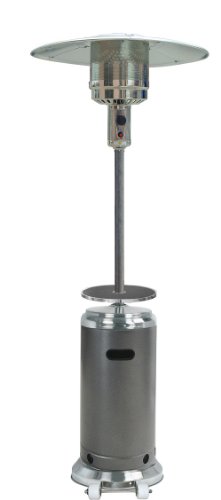
Hiland is the long-running name in this category, and this hammered silver and stainless model publishes 48,000 BTU from a 20 pound propane tank. It rolls on wheels, carries a table around the pole, and is covered by a one-year warranty when bought on Amazon, per the listing. It suits buyers who want the classic tower format from an established outdoor heating brand.
Specs
- Fuel type: Propane, 20 pound tank (not included)
- Heat output: 48,000 BTU
- Model number: HLDS01-SSHST
- Manufacturer: AZ Patio Heaters LLC
- Design: Tower with wheels and table, hammered silver and stainless finish
3. Amazon Basics 46,000 BTU Outdoor Propane Patio Heater — mid-range

The Amazon Basics tower publishes 46,000 BTU and a heat radius of up to 9 feet, which works out to a wide circle of seating for most home patios. It stands on wheels with a water tank base that fills for stability, and the heat output adjusts with a control knob. For a straightforward full-size heater without the table format or the highest output figure, this is the balanced choice in the middle of the range.
Specs
- Fuel type: Propane, 20 pound cylinder
- Heat output: 46,000 BTU
- Heating coverage: Up to a 9 foot radius, per the listing
- Model number: 62108
- Design: Tower with wheels, water tank base and adjustable heat output
4. Dr Infrared Heater DR-238 Carbon Infrared Patio Heater — mid-range

The DR-238 is the electric option here, a carbon infrared bar that mounts on a wall or ceiling and plugs into a standard 120 volt outlet. It publishes three power settings of 900, 1,200 and 1,500 watts, an IP55 rating for indoor and outdoor use, a remote control, and a shutoff timer of up to 9 hours. With no flame and no fumes, it is the right format for covered porches, pergolas and screened spaces where a gas tower does not belong.
Specs
- Fuel type: Electric, 120 volt plug-in
- Power settings: 900, 1,200 and 1,500 watts
- Weather rating: IP55, per the maker
- Model number: DR-238
- Design: Wall or ceiling mount with remote control and timer
5. Cuisinart COH-500 Portable Tabletop Patio Heater — budget
The COH-500 shrinks the propane format down to tabletop size, publishing 11,000 BTU and a heat range of about 30 square feet. It carries a safety tilt switch that shuts the unit off if it tips, an adjustable heat control, and a burner screen guard. It runs on a small portable propane setup rather than a full cylinder, so it fits balconies, small decks and camping tables where a tall tower would overwhelm the space.
Specs
- Fuel type: Propane, portable tabletop format
- Heat output: 11,000 BTU
- Heat range: About 30 square feet, per the listing
- Model number: COH-500
- Safety features: Tilt switch shutoff and burner screen guard
Which patio heater fits which space
For an open deck or patio with a full seating group, choose between the EAST OAK at 50,000 BTU and the Hiland at 48,000 BTU; both are premium towers, and the EAST OAK publishes the wider coverage figure while the Hiland brings the established brand and its warranty. For the same open layout on a mid-range budget, the Amazon Basics tower gives up a little output and the built-in table but keeps the wheels, the fillable base and the adjustable control. For a covered porch, a pergola or any space with a roof, skip gas entirely and mount the Dr Infrared DR-238 above the seating. For a balcony or a small table, the Cuisinart COH-500 is the only pick here sized for the job.
One caution applies to every gas model in this guide: run it outdoors only, on a level surface, with the clearances the maker publishes kept free of anything that can burn. An electric infrared heater avoids the fumes question, but it still needs its mounting clearances respected and a circuit that suits a 1,500 watt draw.
Frequently asked questions
How many BTU do I need for an average patio?
For a typical home patio seating circle, a propane tower publishing 46,000 to 50,000 BTU is the standard full-size range, with claimed coverage up to a 20 foot diameter on the strongest models. Smaller spaces need far less: a tabletop unit at 11,000 BTU covers about 30 square feet, and a 1,500 watt electric infrared bar warms the seats directly in front of it.
Can I use a propane patio heater under a covered porch?
Gas heaters produce carbon monoxide and need open air, so a covered space is a poor match for a propane tower. The safer fit for a porch or pergola is an electric infrared model such as the DR-238, which mounts on a wall or ceiling, has no flame and no fumes, and carries an IP55 rating for outdoor exposure.
How long does a 20 pound propane tank last in a patio heater?
Run time depends on the heat setting. Makers of full-size towers in this class commonly publish figures in the range of 8 to 10 hours on high from a standard 20 pound tank, and longer at lower settings. Check the listing for the model you choose, since burner design and output change the figure.
Are electric patio heaters cheaper to run than propane?
Running cost depends on local electricity and propane figures, so no single answer fits every home. The practical difference is convenience: an electric heater draws from an outlet with nothing to refill, while a propane heater needs cylinder refills or swaps but can stand anywhere outdoors with no cord and no circuit limit.
Conclusion
Match the heater to the space and the fuel to the setting. The EAST OAK 50,000 BTU tower leads this list for open patios that need the widest published coverage, the Hiland 48,000 BTU tower is the established premium alternative, and the Amazon Basics 46,000 BTU tower covers the same job in the mid-range. Covered spaces belong to the Dr Infrared DR-238 electric infrared bar, and small tables belong to the Cuisinart COH-500. Check the current listing for the model you pick before ordering, and follow the maker clearances for safe outdoor use.
More from Amazon
Programs that pair well with the guide above. Offers and eligibility are set by Amazon and may change.
Free shipping on eligible items, Prime Video and more. Eligible new members can start with a free trial.
Start a Prime free trialAudiobooks and podcasts to listen to on the go. Eligible new members can start with a free trial.
Try Audible freeAd-free music streaming. Eligible new subscribers can start with a free trial.
Try Music Unlimited freeA free business account with business pricing and bulk-buying tools for work, shop or home office.
Create a business accountAs an Amazon Associate we earn from qualifying purchases.







Write Your Review
No reviews yet. Be the first to share your experience!