

Key takeaways
- Pick folding shopping cart wheels by matching three things to your routes: wheel size for the surfaces you roll over, material for noise and wear.
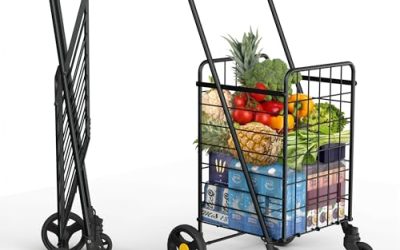
Pick folding shopping cart wheels by matching three things to your routes: wheel size for the surfaces you roll over, material for noise and wear, and design for stairs, curbs and tight turns. Larger wheels climb curbs and cracks more easily, rubber and polyurethane tires cushion the ride, and dual or tri-wheel setups help on stairs.
Wheels are the part of a folding cart that fails first, and the part that determines whether a cart feels effortless or exhausting. This guide explains the choices in plain terms, so you can judge a cart’s wheels or a replacement set before you buy and avoid paying for features your routes never use.
What to Ignore When Comparing Wheels
Skip vague phrases such as premium glide or whisper quiet unless the listing names a material or a bearing type. Color and shiny hubs say nothing about how a wheel handles a curb. Ignore any claim of a huge load rating if the frame, axle or basket is clearly lightweight, because the weakest part sets the real limit. Pay attention instead to diameter, tread material, axle mounting and whether the wheel is replaceable.
Why Wheels Matter More Than the Basket
A basket holds your groceries, but wheels determine how much force you spend moving them. A cart with small, hard wheels will rattle over every sidewalk seam and may stall on a door threshold. A cart with larger, softer wheels rolls over the same obstacles with less jolting, and the difference adds up over a few blocks with a full load.
Wheel quality also affects safety. Wheels that wobble or lock unexpectedly can tip a loaded cart. When comparing carts, inspect the axle attachment, the wheel cover and the type of bearing rather than relying on the basket size or color. A wheel that is firmly mounted and spins freely by hand is a good sign.
Wheel Size and Diameter
Diameter is the single most useful number. Smaller wheels, such as those around the size of a mug, suit smooth indoor floors and short trips. Medium wheels cope with most sidewalks. Larger wheels, about the size of a dinner plate or bigger, handle curbs, gravel and broken pavement better.
Wider wheels also spread weight and track better over soft ground. If you live in a city with uneven sidewalks, prioritize diameter over color or style. If your trips are short and indoor, you can accept a smaller wheel in exchange for a lighter cart. Be wary of oversized wheels on a flimsy frame, because the extra leverage can twist a weak axle.
Materials and Tread
Hard plastic
Hard plastic wheels are light and inexpensive, but they are noisy and transmit bumps. They can crack on rough pavement. They suit light loads and smooth surfaces such as store floors and indoor corridors.
Rubber and polyurethane
Rubber and polyurethane tires dampen sound and cushion the ride. They grip wet pavement better and tend to wear more slowly. They add some weight and cost, but they make a noticeable difference for daily use, especially for a shopper who walks a few blocks each way.
Pneumatic or air-filled
Air-filled wheels give the softest ride over rough ground, but they can puncture and need pressure checks. They are less common on folding carts and make sense for rough outdoor terrain such as gravel paths, where a firm wheel would jolt the load.
Foam and flat-free options
Foam-filled wheels resist punctures without needing air. They are firmer than pneumatic tires but maintenance-free, a good compromise for people who dislike upkeep and want a wheel that is ready whenever the cart leaves the closet.
Swivel, Fixed and Locking Designs
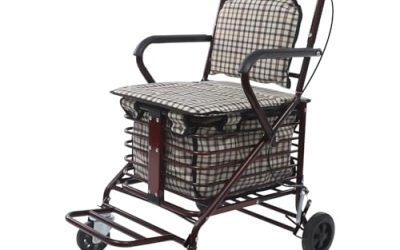
Swivel wheels rotate to follow your turns and are helpful in aisles and elevators. Fixed wheels track straighter, which helps on slopes and long walks. Many carts combine two swivel wheels with two fixed ones, balancing steering with stability. Check that swivel casters turn freely and do not wobble when the cart rolls straight.
Wheel locks or brakes keep a cart in place on a bus or while you load groceries. If you plan to park the cart on a slope or at a stop, check that the locks engage firmly and release easily. Swivel wheels without a lock can drift on uneven ground, which is a nuisance on a sloped driveway or a train platform.
Stair-Climbing Wheel Designs
Stair-climbing carts use a tri-wheel cluster or a pair of dual wheels on each side that rotate over the edge of each step. They help if you face stairs often, but they can make the cart bulkier, and they work best at a steady pace with a controlled tilt.
If your home has only a few steps, a standard cart with large wheels, which you can bump up one stair at a time, may be enough. Anyone with balance concerns should ask a health professional before pulling a loaded cart up steps. Look for wheels with a deep tread and a stable axle that does not flex under load.
Maintenance and Replacement
Wheels pick up hair, thread and grit around the axle, which slows rolling and wears bearings. Every few weeks, pull debris from the axle area and wipe the tire. A drop of light oil on metal axles can reduce squeaks, though keep it off the tread.
If a wheel cracks or goes flat, check whether the cart uses a standard axle and diameter. Measure the axle thickness, the wheel diameter and the hub width before ordering a replacement, since a near fit will wobble. Some carts use riveted or sealed wheels that cannot be swapped, which is worth knowing before you buy.
Matching Wheels to Real Routes
Think about the three most common trips you make. A short walk to a nearby market over smooth pavement does not need the same wheels as a transit ride followed by a cracked sidewalk and a flight of steps. List each surface, from store floors to curbs to stairs, and rank them by how often you cross them.
For mostly indoor or smooth routes, small to medium wheels with a quiet tread are enough, and they keep the cart light. For uneven sidewalks, step up to larger rubber or polyurethane wheels. For frequent stairs, a tri-wheel or dual-wheel design is worth considering. Wet weather adds another factor: a tread with some grip and a wheel cover that sheds water helps keep the cart from skidding or collecting grit.
Finally, consider the load. A cart that carries heavy bottles or bags of laundry puts more stress on the axle and bearings than one that carries a few light items, so look for a sturdy axle and wheels that spin freely under weight.
Wheel Features at a Glance
| Wheel feature | Good for | Watch out for |
|---|---|---|
| Large diameter | Curbs, cracks, gravel | Slightly bulkier fold |
| Rubber or polyurethane tread | Quiet, cushioned rides | Added weight |
| Swivel casters | Tight aisles and turns | Drift on slopes |
| Fixed rear wheels | Straight tracking | Wider turning circle |
| Tri-wheel stair design | Frequent steps | More weight and complexity |
| Locks or brakes | Standing on slopes | Loose or stiff mechanisms |
Before You Buy
- List the surfaces you cross most often: smooth floors, sidewalks, gravel or stairs.
- Choose a diameter that handles the roughest surface on your route.
- Prefer rubber or polyurethane for daily outdoor use.
- Check for locks if you stop on slopes or at transit stops.
- Look for replaceable wheels or standard axle sizes in case of wear.
- Compare wheel features rather than basket color, and plan for your 2026 shopping routes.
Related guides
- Rolling Cart For Kitchen With Butcher Block Top
- Lightweight Folding Shopping Carts For Seniors
- How To Choose A Kitchen Cart Size And Top Material
Frequently Asked Questions
What wheel size is best for sidewalks?
Medium to large diameters handle seams and curbs more smoothly. Smaller wheels get stuck more often and jolt the load.
Are rubber wheels worth the extra cost?
For regular outdoor use, yes. They are quieter, grip better and tend to last longer than hard plastic.
Do I need swivel wheels?
Swivel wheels help in narrow aisles. A mix of swivel and fixed wheels balances steering and straight-line stability, and a lock adds control when you stop.
Can I replace the wheels on a folding cart?
Often, yes, if the axle size and mounting match. Measure the axle and wheel diameter before ordering, and confirm that the wheels are not permanently riveted in place.
More from Amazon
Programs that pair well with the guide above. Offers and eligibility are set by Amazon and may change.
Free shipping on eligible items, Prime Video and more. Eligible new members can start with a free trial.
Start a Prime free trialAudiobooks and podcasts to listen to on the go. Eligible new members can start with a free trial.
Try Audible freeAd-free music streaming. Eligible new subscribers can start with a free trial.
Try Music Unlimited freeA free business account with business pricing and bulk-buying tools for work, shop or home office.
Create a business accountAs an Amazon Associate we earn from qualifying purchases.


Write Your Review
No reviews yet. Be the first to share your experience!