

For most homeowners hauling mulch, soil and branches, a four-wheel poly dump cart in the 600 pound class is enough, while buyers who move stone, wet soil or firewood every week should step up to a 1,200 pound cart with a larger bed and 13-inch wheels. A steel flatbed utility cart suits people who haul long or bulky items more than loose material, and a big-wheel single-axle cart suits uneven ground and slopes. The sections below compare the main options using the specifications the makers publish, and they flag where reviewers disagree.
Our top picks
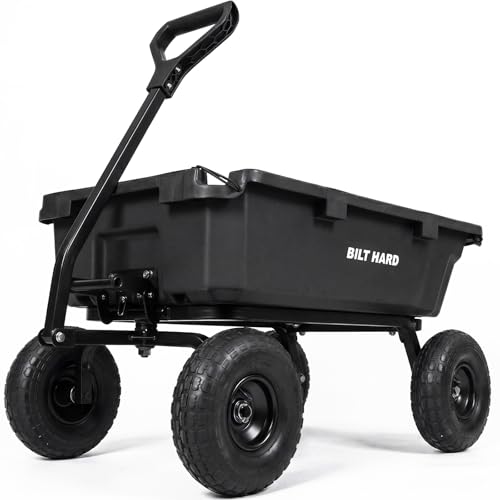 BILT HARD 900 lbs Poly Garden Dump
- All‑Terrain Pneumatic Tires: Equipped with 10‑inch pneumatic tires,…
- Flexible Capacity Expansion: Featuring innovative side expansion slots,…
- Heavy-Duty Construction: Built with a spacious, heavy-duty poly…
| Product | Key specs | |
|---|---|---|
| BILT HARD 900 lbs Poly Garden Dump | All‑Terrain Pneumatic Tires: Equipped with 10‑inch pneumatic tires,… Flexible Capacity Expansion: Featuring innovative side expansion slots,… Heavy-Duty Construction: Built with a spacious, heavy-duty poly… | Check price |
 VEVOR Heavy Duty 1200lbs 7 Cu.Ft Wheelbarrow | Check price | |
 BILT HARD Poly Garden Dump Cart 1200 | Check price | |
 Gorilla Carts Dump Garden Cart | Amazon Exclusive Our patented quick-release dumping system allows you to… 13-inch maintenance-free tires engineered to withstand tough terrain… | Check price |
As an Amazon Associate we earn from qualifying purchases at no extra cost to you.
Heavy duty dump carts at a glance
| Cart | Best for | Key stated specs | Limits |
|---|---|---|---|
| Gorilla Carts GOR4PS poly dump cart | Typical yard work, small gardens | The maker lists 600 lb load, 4 cu ft, 36 by 20 inch bed, 10-inch pneumatic tires, about 31.5 lb, steel frame with poly bed | Small bed; pneumatic tires can go flat; maker says it is not towable |
| Gorilla Carts 7GCG-NF flat-free dump cart | Frequent heavy loads, no flat risk | The maker lists 1,200 lb load, 7 cu ft, 39.5 by 27 inch bed, 13-inch flat-free tires, about 54 lb, convertible tow handle | Heavy to move empty; flat-free tires ride firmer |
| Gorilla Carts GCG-7 pneumatic dump cart | Same capacity with a softer ride | The maker lists 1,200 lb load, 7 cu ft, 13-inch pneumatic tires | Tires need air checks and can puncture |
| Gorilla Carts 1,000 lb steel utility cart | Long items, bagged goods, firewood | The maker lists 1,000 lb load, 49 by 24.5 inch steel bed, removable sides, 13-inch pneumatic tires, roughly 60 lb | Not a dump cart; unloading means tipping or shoveling |
| Rubbermaid Commercial Big Wheel cart | Slopes, soft lawn, rough ground | The maker lists 300 lb load, two 20-inch wheels, one-piece high-density polyethylene tub, about 45 lb | Lower capacity; two-wheel balance takes practice |
| Value brands (VEVOR, CAMMOO, Sekey, BILT HARD) | Budget buyers wanting a dump function | Roundups report capacities from 400 to 1,200 lb depending on model | Shorter track record; listings vary, so read the exact model sheet |
What “heavy duty” actually means for a dump cart
Capacity numbers on carts are a ceiling, not a working load. A 1,200 pound rating assumes evenly spread weight on level ground, and a 4 cubic foot cart cannot physically reach its 600 pound rating with light material such as mulch or leaves, so volume matters as much as the weight rating.
What separates a heavy duty cart from a light one is mostly structural: a steel frame, a bed that resists cracking, large wheels and a dump latch that does not bind under load. A poly bed will not rust and tolerates dents, while a steel bed tolerates sharp tools but needs paint care.
Gorilla Carts GOR4PS: the all-round homeowner pick
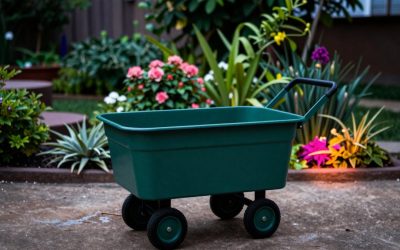
The maker describes this cart as a 600 pound, 4 cubic foot poly dump cart with a powder-coated steel frame, a bed measuring 36 by 20 inches, and 10-inch pneumatic tires. It lists an overall size of about 38.7 by 20 by 19.5 inches and a weight near 31.5 pounds, which keeps it easy to lift into a truck bed or hang in a garage. A quick-release latch lets the bed tip forward and empty in one motion.
Several independent roundups name it the best fit for typical homeowners because it handles mulch, compost, pots and prunings without being awkward to steer. The trade-offs are the small bed, which means more trips for bulk jobs, and the pneumatic tires, which can lose air or puncture on thorns and nails. The maker also states that the cart is not designed to be towed, so it will not suit anyone who wants to pull it behind a tractor.
Gorilla Carts 7 cubic foot models: the heavy hauling tier
The maker lists the 7GCG-NF at 1,200 pounds, 7 cubic feet, with a 39.5 by 27 inch bed, overall dimensions of 45.3 by 28.7 by 26.1 inches, and 13-inch flat-free tires. The weight is given as about 54 pounds, so it is nearly twice as heavy as the smaller cart. A two-in-one handle converts between hand pulling and towing behind an ATV or lawn tractor, and the maker advertises zero-turn steering and a four-wheel base.
The separate GCG-7 uses the same capacity and bed with 13-inch pneumatic tires, according to the maker and retailer spec sheets. The choice between the two is simple. Flat-free tires remove maintenance and puncture worries, but reviewers describe a stiffer ride and more vibration over bumps. Pneumatic tires cushion the load and roll more easily over roots, but they need attention. Roundups also mention that this size costs noticeably more than the 4 cubic foot class and that the swivel joint and cotter pin hardware deserve an occasional look after long use.
Gorilla also lists 9 and 12 cubic foot poly dump carts, though its cart page gives few details beyond the names.
Steel utility carts: when a dump bed is not the point
The 1,000 pound steel utility cart from the same maker is not a dump cart. Its page describes a powder-coated steel bed of about 49 by 24.5 inches with removable side panels that convert it to a flatbed, a 2-in-1 handle, and 13-inch pneumatic tires, and it lists product dimensions of about 56 by 25 by 26 inches. Weight is listed near 60 pounds, with retailer figures varying by a few pounds.
This style wins for long boards, fence rails, bags, boxes and firewood, because the flat deck and open sides load easily. It loses for loose material, since a flatbed cannot tip, so soil or gravel has to be shoveled out. Steel beds need touch-up paint if scratched to prevent rust, and the maker sells replacement side panels separately.
Big-wheel carts for hills and soft ground
Rubbermaid Commercial sells a Big Wheel cart under its farm and garden line. The maker lists a 300 pound rating, a seamless high-density polyethylene tub, and two 20-inch pneumatic wheels, with an overall length near 58 inches and a weight around 45 pounds. Listings disagree on the volume figure, with some giving 7.5 cubic feet and others 8.75, so treat the volume as approximate.
The large wheels roll over lawn, mud and rough turf with less rutting than small four-wheel carts, and the one-piece tub is easy to wash out. The compromise is balance, since you carry some weight in your hands. It suits gardeners who value terrain handling over maximum payload.
Budget tier and value brands
Roundups regularly list VEVOR, CAMMOO, Sekey and BILT HARD dump carts as lower-priced options. The reported capacities vary widely: one list shows a CAMMOO model at 600 pounds with 4 cubic feet and no-flat tires, a BILT HARD steel cart at 400 pounds with 10-inch rubber tires and a rotating handle, a VEVOR steel cart at 900 pounds, and a Sekey dump cart at 1,000 pounds. These figures come from review sites that carry affiliate links, so they are best treated as indicators rather than confirmed ratings.
Reviewers caution about shorter service records and less documented dump latches. A budget cart suits occasional use, while weekly heavy work favors a model with parts readily available.
Fit, size and storage notes
- Check gate and shed door widths. The 7 cubic foot Gorilla cart is about 28.7 inches wide overall, and a Big Wheel cart is about 33 inches wide.
- Consider the weight you must lift. A cart near 54 pounds is awkward to load into a small car, while a 31 pound cart is manageable.
- Think about towing. If you plan to pull behind an ATV or mower, confirm the maker states the model is towable. The maker states the small GOR4PS is not.
- Load low and centered, and never stand on the cart or ride in it. Keep loads under the rated figure, and use the dump latch only on level ground with people clear of the front.
Pick the right cart: decision table
| Pick this if you… | Choose | Why |
|---|---|---|
| Garden on a small to medium lot and want a light cart | Gorilla GOR4PS class (600 lb, 4 cu ft) | Easy to lift, store and steer; enough volume for mulch and prunings |
| Move soil, stone or logs most weekends | Gorilla 7 cu ft class (1,200 lb) | Larger bed and 13-inch wheels cut the number of trips |
| Have thorny brush or sharp debris | Flat-free version such as the 7GCG-NF | No tires to puncture, though the ride is firmer |
| Haul long or bulky items more than loose material | Steel utility cart with removable sides | Flat deck and open sides handle awkward loads |
| Work on slopes or soft lawn | Rubbermaid Big Wheel style cart | 20-inch wheels roll over rough ground |
| Need to tow with a tractor or ATV | Models the maker lists with a convertible tow handle | Hitch-ready design stated by the maker |
| Want the lowest outlay and use it rarely | Value brands such as VEVOR or CAMMOO | Dump function at a lower budget tier, with shorter track records |
Budget tiers in plain terms
The budget tier brings smaller beds and less documentation. The mid-range tier holds the established 600 pound poly dump carts, which cover most household jobs. The premium tier holds the 1,200 pound carts with large wheels and heavier frames, and the extra spend buys payload, wheel size and parts supply.
Alternatives worth considering
- Garden wheelbarrow. Better for tight paths, planting beds and narrow gates, with less payload and more strain on your back.
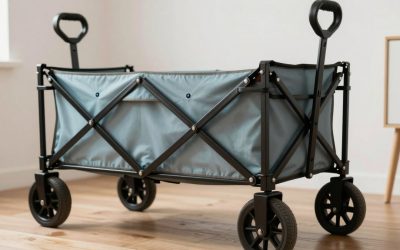
- Folding utility wagon. Better for light carrying and storage, but fabric beds are poor for wet soil and sharp debris.
- Lawn tractor dump trailer. Worth a look on larger properties where you already own a tractor, as long as the hitch and tongue weight are within the manual limits.
Frequently Asked Questions
How much weight can a garden dump cart really carry?
The rating is a maximum for evenly spread weight on level ground. Real loads are usually lower because dense material such as stone makes the cart hard to push and tip safely. Stay well below the stated figure on slopes.
Are flat-free tires better than pneumatic tires?
Flat-free tires remove the risk of punctures and need no air, which suits thorny or debris-heavy yards. Pneumatic tires cushion the load and roll more easily over bumps. The choice comes down to maintenance tolerance versus ride comfort.
Can I tow a dump cart behind a lawn mower or ATV?
Only if the maker states the model is towable, such as the larger Gorilla carts with a convertible handle. The maker states that the small GOR4PS is not designed for towing. Follow the tow vehicle manual for tongue weight and speed limits.
Is a poly bed or a steel bed more durable?
Poly will not rust and shrugs off dents. Steel stands up to sharp tools but needs paint care. Most homeowners are well served by poly on a steel frame.
What size cart is best for mulch and soil?
A 4 cubic foot cart handles small beds with several trips, while a 7 cubic foot cart moves a pile far faster. Remember that 1 cubic yard equals 27 cubic feet, so a bulk delivery needs many loads in either size.
How do I stop a dump latch from sticking?
Clean soil and debris from the latch after each use and apply a light lubricant to the pivot. If it still binds, order the maker’s replacement part.



Write Your Review
No reviews yet. Be the first to share your experience!