

Key takeaways
- Car trunk: the Suspenz DLX and Malone Nomad fold flat and weigh roughly 8 to 9 lb according to reviewers.
- Kayak hatch: the Railblaza C-Tug breaks down to fit an 8 in hatch, so the cart can ride with you on the water.
- Roof rack drive: large bunker-bar carts like the Wilderness Systems are bulky and are often kept in a truck bed or garage rather than stowed on the boat.
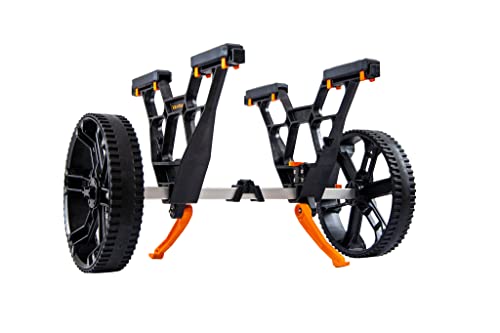
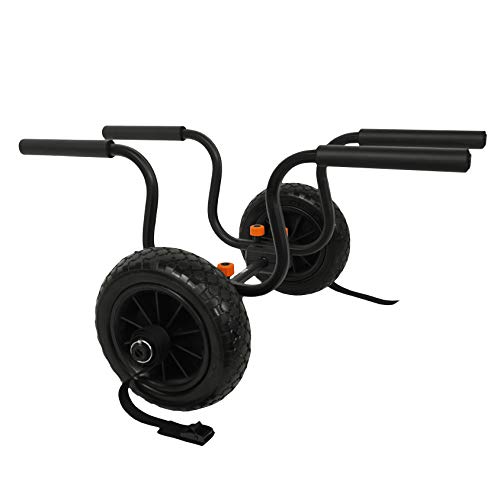
The Wilderness Systems Heavy Duty cart suits loaded fishing kayaks and tandems, the Suspenz DLX Airless or Malone Nomad TRX suit light recreational boats and smooth paths, and a balloon-tire or SandTrakz cart is the choice if your launch is soft sand. The right pick depends mostly on the boat’s loaded weight, the surface between car and water, and how much you need the cart to pack small.
Our top picks


As an Amazon Associate we earn from qualifying purchases at no extra cost to you.
Kayak Carts at a Glance
| Cart | Best for | Stated capacity | Wheels and frame | Main limit |
|---|---|---|---|---|
| Wilderness Systems Heavy Duty | Loaded fishing kayaks, tandems | 450 lb | 12 in airless polyurethane wheels, marine-grade aluminum, adjustable width and height | Bulky; premium tier |
| YakAttack TowNStow Bunkster | Solo loading | 450 lb on flat ground, 300 lb on trails (as reported) | Anodized aluminum and polymer, twin kickstands | Straps extra; some plastic parts |
| Suspenz All Terrain Super Duty Airless | Rough, off-trail ground | 350 lb | 15 in airless wheels, powder-coated steel, about 17 lb | Steel can rust near salt water; harder to store |
| Railblaza C-Tug with SandTrakz | Sand, saltwater, small storage | About 300 lb with wheels compressing | Composite polymer, puncture-free wheels, breaks down to fit a hatch | Slides on slick ramps; premium tier |
| VEVOR Heavy Duty | Value hunters with a heavier boat | 350 lb | 13 in beach wheels, 2 mm aluminum alloy | Straps and pins reported as budget grade |
| Bonnlo Beach Cart | Soft sand | 330 lb | 12 in low-pressure balloon tires, aluminum bunker bars | Tires can puncture |
| Suspenz DLX Airless | Light kayaks, car-trunk storage | 150 lb (about 125 lb in one review) | Airless, quick-release wheels, about 9 lb | Scissor frame can fold on roots |
| Malone Nomad TRX | Budget, pavement | 150 lb | Marine-grade aluminum, never-flat tires, about 8 lb, folds to about 4 in | Narrow wheels sink in sand and mud |
| Malone WideTrak ATB | Wide or odd-shaped hulls | Rated by the maker for large hulls | Wide-stance design | Larger and heavier than folding scissor carts |
Capacities and weights above come from outlet reports (Outdoor Life, Top Notch Outdoor and similar review sites) and may differ slightly between versions. Compare against the maker’s own product page for the exact version you buy.
Start With the Boat, Not the Cart
Your kayak’s loaded weight is the starting number. Add the hull, seat, paddle, crate or cooler, tackle, a pedal drive or battery if you have one, and any water. A rough sum that lands near a cart’s rating leaves no margin, so choose a cart rated clearly above it. Outlets reviewing carts note that real capacity drops on soft ground: YakAttack’s rating is lower on trails than on flat ground, and compressible wheels such as SandTrakz reduce capacity as they flex.
Hull shape matters nearly as much. Scissor-style carts hold a V-shaped recreational kayak well but can struggle with flat-bottom or wide fishing hulls, which is where bunker-bar or bunk-style carts such as the Wilderness Systems, Suspenz Super Duty and VEVOR come in. Sit-on-top fishing kayaks with scupper holes can use scupper-style carts, but the maker’s manual should state which hulls are supported.
Wheels: The Real Differentiator
Airless
Airless wheels never go flat, which is why they dominate lists. They are a good all-round choice on pavement, gravel and packed dirt. Reviewers note they ride harder than inflated tires and that narrow versions sink in mud and sand.
Balloon or low-pressure inflated
Wide inflated tires spread the load and float over soft sand. The Bonnlo comes with a pump and straps according to reviewers, though thin tires can puncture and replacement can be fiddly. Carry a patch kit or pick a puncture-resistant design if your launch is full of shells or brambles.
Compressible track wheels
The Railblaza SandTrakz wheels are puncture-free and designed for sand and salt exposure. Reviewers like that the cart breaks down in about half a minute and fits inside a hull hatch. The trade-off is capacity and the premium tier cost.
Materials and Salt Water
Aluminum and composite frames resist rust. Steel, as on the Suspenz Super Duty, is strong but needs rinsing and drying after salt exposure. Pins and cotter pins on budget carts are a common rust point according to reviewers of the VEVOR. After every saltwater trip, a freshwater rinse and a wipe of the bearings and hinges extends the life of any cart.
Folding, Storage and Carrying
- Car trunk: the Suspenz DLX and Malone Nomad fold flat and weigh roughly 8 to 9 lb according to reviewers.
- Kayak hatch: the Railblaza C-Tug breaks down to fit an 8 in hatch, so the cart can ride with you on the water.
- Roof rack drive: large bunker-bar carts like the Wilderness Systems are bulky and are often kept in a truck bed or garage rather than stowed on the boat.
Budget Tiers
| Tier | Typical choices | What to expect |
|---|---|---|
| Budget | Malone Nomad TRX, RAD Sportz, VEVOR | Light weight or large capacity, but thinner build, lower ratings or basic hardware |
| Mid-range | Suspenz DLX Airless, Suspenz Super Duty, Bonnlo | Balance of capacity and portability; includes airless or balloon options |
| Premium | Wilderness Systems Heavy Duty, YakAttack TowNStow, Railblaza C-Tug | Higher ratings, better bearings, easier loading, corrosion resistance |
Pick X If… Decision Table
| Pick this | If |
|---|---|
| Wilderness Systems Heavy Duty | Your kayak is 200 lb or more loaded and the path is mixed terrain |
| YakAttack TowNStow | You launch alone and want kickstands to hold the cart upright |
| Suspenz Super Duty | The path is rough and you want large wheels and adjustable bunker bars |
| Railblaza C-Tug | You paddle in salt water over sand and want a cart that rides in a hatch |
| VEVOR Heavy Duty | You want a heavy rating at a lower tier and accept budget hardware |
| Bonnlo balloon cart | The launch is soft sand |
| Suspenz DLX Airless | The boat is light and the trunk is small |
| Malone Nomad TRX | The route is smooth pavement and cost matters |
Safe Use Tips
- Strap the kayak snugly; a loose hull can slide off bunkers on a slope.
- Lift with your legs, and ask for help with heavy boats. Backs are easier to strain than carts are to replace.
- Remove or lash loose gear, since paddles and rods can fall.
- Take extra care on ramps and wet surfaces, where some carts are reported to slide.
- Do not exceed the stated capacity of the cart or of the roof rack and vehicle used.
Alternatives to Consider
- Pelican Universal cart: described as light and simple for small recreational kayaks, not for fishing models.
- RAD Sportz folding cart: a budget folding design listed at 150 lb with 10 in airless wheels.
- Two-person carry or shoulder strap: for short carries with a light boat, a carry strap avoids a cart entirely.
Matching a Cart to Common Kayak Types
Recreational and touring kayaks
These boats are usually long, relatively light and V-shaped or rounded underneath, which is the hull a scissor-style cart holds best. Reviewers point to the Malone Nomad TRX and Suspenz DLX Airless for this group because they fold flat, weigh under ten pounds and keep the trunk free. The limit is the 150 lb rating, so a touring boat packed for an overnight trip may exceed it.
Sit-on-top fishing kayaks
Fishing kayaks are wider, heavier and carry crates, rod holders, batteries and coolers. Reviewers steer these buyers toward the Wilderness Systems Heavy Duty, the YakAttack TowNStow or the Suspenz Super Duty, all rated at 350 lb or more, with bunks that cradle a wide hull. Pedal-drive boats are often the heaviest of all, so adding the drive unit weight to the sum matters.
Tandems and canoes
Two-person boats need a wider stance and a higher rating. Top Notch Outdoor names the Malone WideTrak ATB as its best cart for large kayaks and canoes, while heavy-duty bunk carts also fit. For canoes, confirm that the cart maker lists canoe support.
Inflatable and small boats
Many inflatable kayaks come with their own wheeled bag or are light enough to carry. A small folding cart still helps on long walks to the water, but pick one with soft or wide wheels so it does not dig into gravel.
Frequently Asked Questions
How do I know what capacity I need?
Add the kayak’s hull weight to the gear you carry to the water, then choose a cart rated well above that number. Capacities drop on soft or uneven ground, so more margin helps on trails.
Are airless tires good enough?
For pavement, gravel and packed paths, yes, and they never go flat. For soft sand, wider balloon or compressible wheels roll more easily.
Will a folding cart fit a wide fishing kayak?
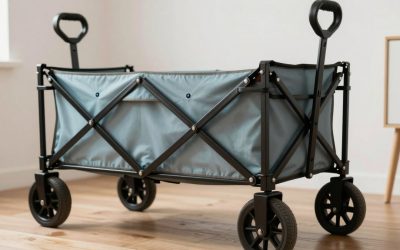
Scissor folding carts are typically meant for lighter recreational boats. Wide or flat hulls usually need bunker-bar carts, so check the hull width the maker lists.
Can a cart go in salt water?
Aluminum and composite carts handle it better than steel. Rinse with fresh water afterward and dry the hardware, since cotter pins and bolts are a rust point.
Can I leave the cart on the kayak?
Some carts such as the Railblaza and YakAttack are built to stow aboard, but it depends on the hull and hatch. Read the manual so you do not affect the boat’s balance or block deck gear.
How do I load a cart alone?
Choose a design with kickstands, set the cart on level ground and lift one end of the kayak onto the bunks before centering it. Strap it before moving. If the boat is heavy, a helper is safer.




Write Your Review
No reviews yet. Be the first to share your experience!