

Key takeaways
- Rust: steel frames can rust at screws and weld points; touch up chips with paint.
- Sun: UV fades resin and dries wood. Store under cover when possible.
- Mildew: wipe cushions and wicker with mild soapy water.
- Wheels: sand or grit jams swivel joints; rinse and lightly lubricate.
- Wind: lock the casters, because a light cart will roll away in a strong breeze.
The best outdoor serving cart for most patios is a weather-resistant rolling bar cart with 5 to 6 inch locking wheels, a 30 to 36 inch height, and rust-proof materials such as powder-coated aluminum or resin wicker over a steel frame. Tall wheels matter more than looks: they cross pavers and deck gaps without spilling drinks.
Our top picks
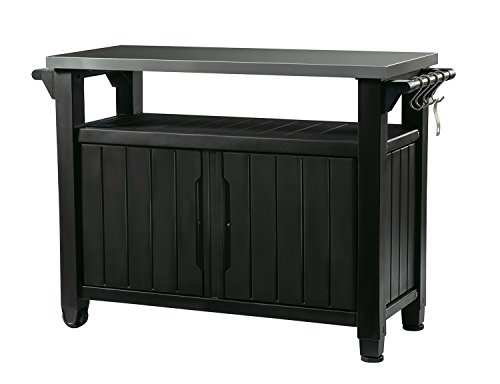

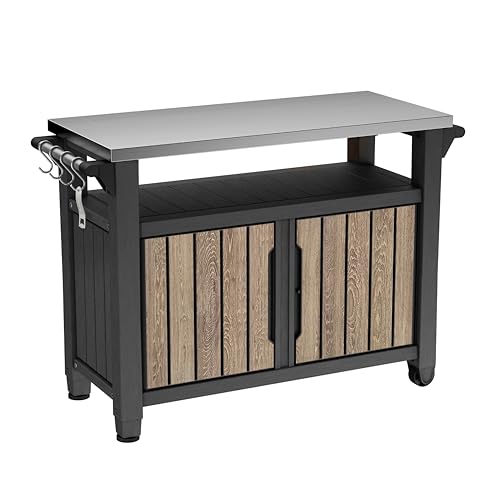

As an Amazon Associate we earn from qualifying purchases at no extra cost to you.
Quick Comparison of Outdoor Serving Cart Types
| Pick | Best for | Typical size | Capacity | Price tier |
|---|---|---|---|---|
| Powder-coated aluminum bar cart | Best overall, all-weather | 30 x 16 x 34 in | 60-100 lb | Mid |
| Resin wicker 2-tier cart | Best for style on a covered patio | 28 x 16 x 32 in | 40-70 lb | Budget to mid |
| Teak or acacia wood cart | Best for hardwood look | 32 x 18 x 34 in | 60-100 lb | Premium |
| Cart with built-in cooler | Best for parties | 36 x 20 x 36 in | 80-120 lb | Mid to premium |
| Foldable 3-tier utility cart | Best for storage and budget | 26 x 15 x 33 in | 45-80 lb | Budget |
Best Overall: Powder-Coated Aluminum Cart
Aluminum cannot rust, and a powder coating protects against scratches and UV fade. Models with removable serving trays are convenient for carrying drinks indoors and out. Rated loads are usually 60 to 100 pounds, enough for a full set of glassware and a few bottles.
Main trade-off: aluminum is light, so a loaded cart can tip on uneven ground if the wheels are small.
Best for Style: Resin Wicker Cart
All-weather resin wicker over a powder-coated steel frame looks like natural rattan without absorbing water. It suits covered patios and screened porches. In full sun the weave can fade over several seasons, and the shelves are often glass or wood-effect panels that can crack if overloaded.
Best for Hardwood Look: Teak or Acacia Cart
Teak has natural oils that resist rot, and it weathers to a silver gray if left untreated. Acacia is cheaper but needs yearly oiling to avoid cracking. Hardwood carts are heavier at 25 to 40 pounds, which gives stability but makes them harder to move across steps.
Best for Parties: Cart With Built-In Cooler
A cart with an insulated bin for ice and drinks removes the need for a second cooler. Choose a design with a drain plug so melted ice does not collect, and keep an eye on the total weight, since a full bin adds 30 to 50 pounds.
Best Budget: Folding 3-Tier Utility Cart
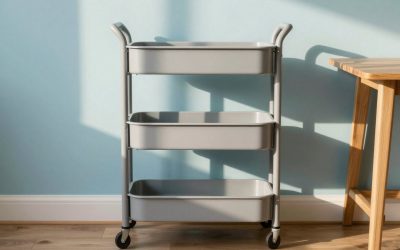
A simple foldable steel or plastic cart can be moved to the garage in winter. It does not look fancy, but it is functional for grilling trays, plates and condiments. Check for rubber stoppers on the shelves so plates do not slide.
How to Choose by Numbers
Plan around the heaviest likely load, then match the wheel size to your surface. Per the manufacturer’s spec sheets, small 2 to 3 inch casters work on smooth patio concrete, but pavers, wood decking and gravel need 5 inch or larger wheels.
| Surface | Wheel size | Wheel type | Notes |
|---|---|---|---|
| Smooth concrete | 3 in | Rubber or nylon | Locking brakes still needed |
| Pavers | 5 in | Rubber | Gaps can catch small wheels |
| Wood deck | 4-5 in | Rubber | Plastic can mark soft wood |
| Grass or gravel | 6+ in | Pneumatic or wide | Cart may need to be pushed with care |
Worked example: a party setup of 12 glasses at 0.6 lb, two bottles at 3 lb each, an ice bucket at 12 lb, and a tray at 3 lb comes to 28 pounds, so even a 40 pound rated wicker cart handles it.
Ownership Realities
- Rust: steel frames can rust at screws and weld points; touch up chips with paint.
- Sun: UV fades resin and dries wood. Store under cover when possible.
- Mildew: wipe cushions and wicker with mild soapy water.
- Wheels: sand or grit jams swivel joints; rinse and lightly lubricate.
- Wind: lock the casters, because a light cart will roll away in a strong breeze.
How to Choose an Outdoor Serving Cart Step by Step
An outdoor cart lives with sun, rain, uneven ground and a crowd of guests. Choosing well means thinking about those conditions before thinking about looks.
- Define the main job. Is it a drinks station, a grill-side table, a dessert trolley or a place to park plates? The job shapes the shelf layout, the height and the need for a cooler or drawers.
- Check the surface it will cross. Smooth concrete is forgiving, but pavers, decking gaps and grass are not. Pick the wheel size to match the roughest section of the route.
- Consider the exposure. A covered porch allows resin wicker and wood. A fully open yard calls for aluminum or other all-weather materials.
- Work out the weight. Add up the glassware, bottles, ice and serving dishes you will put on it, and compare the total with the cart’s rating.
- Plan for storage. Will it stay out all year, go into a garage for winter, or fold away? A foldable model can be tucked into a corner, but a fixed frame will need an outdoor cover.
- Look at the details. Locking wheels, raised shelf edges, drain holes and rustproof fasteners all matter far more in the outdoors than in a living room.
Who Should Skip an Outdoor Serving Cart
- Your patio is small and rarely used for guests. A small side table does the same job and takes up less space.
- The ground is steep or very rough. A rolling cart on a slope is a spill waiting to happen. A fixed table or a bar counter is more stable.
- You live in a very windy location. Light carts shift and tip, even with the wheels locked. A heavy fixed piece is a better fit.
- You have no sheltered storage and no budget for a cover. Exposed wicker, wood and steel carts decline quickly when left in the elements without any protection.
- You wanted a cooking surface. Serving carts are not rated for heat, so they are not suited as a grill table beside hot surfaces.
Safety, Stability and Weather Considerations
Hot food, glass and a crowd of people raise the stakes on any rolling piece. These are the points worth checking.
Stability on uneven ground
- Larger wheels and a wide base are far more stable than small casters and a narrow frame.
- Always put the heavy items, such as bottles, ice buckets and cooler bins, on the lowest shelf.
- Lock the wheels whenever the cart is parked, even on ground that looks flat.
- Avoid pulling the cart backward over a raised edge. Push it from behind so you can see the obstacle.
Heat and flame
- Keep the cart well away from open flame, fire pits and hot grill surfaces. Wicker, resin and plastic can melt or burn.
- Do not set a hot pan directly on a wood or resin top. Use a trivet or a heat-safe mat.
Sun, rain and wind
- Strong sun can warm a metal top enough to be uncomfortable to touch. A light-colored finish or a shaded spot helps.
- Rain collects on flat shelves. Choose drainage holes or slatted shelves, and tip the water off before the cart is stored.
- Wind catches tall, light carts. Weight the lowest shelf, lock the wheels and avoid stacking tall items on top.
Scenario-Based Picks From the Types Above
- A year-round open patio. The powder-coated aluminum cart resists rust and fading, and it can be moved when needed.
- A covered porch or screened room. The resin wicker cart brings a softer look without the upkeep of natural wicker.
- A garden-party setting with a preference for natural materials. The teak or acacia cart suits the look, and its weight adds stability. Plan for periodic oiling with acacia.
- Frequent summer gatherings. The cart with a built-in cooler keeps drinks cold in one place and frees a table. Use the drain plug and empty it after each event.
- A tight budget and flexible storage. The foldable three-tier utility cart can hold plates and condiments during the season, then fold into a garage.
- A poolside setup. Choose a model with corrosion-resistant hardware, locking wheels and raised edges, and avoid glass shelves where wet feet are common.
| Setting | Best type | Key detail to check |
|---|---|---|
| Open patio, all seasons | Powder-coated aluminum | Wheel size for the surface |
| Covered porch | Resin wicker | Shelf panel strength |
| Garden or deck, natural look | Teak or acacia | Finish and oiling needs |
| Party hosting | Cart with cooler | Drain plug and loaded weight |
| Seasonal, small space | Folding utility cart | Shelf stoppers and hinge locks |
Cleaning, Protection and Lifespan
Outdoor furniture ages according to how it is looked after. A short routine at the start and end of each season goes a long way.
Material-specific care
- Aluminum. Wash with mild soap and water, then rinse and dry. Touch up chips in the coating to prevent oxidation at the edges.
- Resin wicker. Brush off dust, wash with a soft brush and mild soap, and rinse. Avoid pressure washers, which can fray the weave.
- Teak. Clean with a soft brush and soapy water. Leave it to weather to gray, or apply a teak sealer if you prefer the original color.
- Acacia. Oil it at the start of each season, and wipe up spills quickly to prevent stains.
- Steel frames. Check the screws and weld points for rust, sand it off and touch up with exterior paint.
Seasonal storage
- Clean and dry the cart before storing it, since trapped moisture encourages mildew.
- Put it in a garage, shed or covered area, or use a fitted cover that allows airflow.
- Raise the wheels off wet ground with a pallet or a board.
- Remove any cushions, mats and removable trays and store them indoors.
With regular care, an aluminum or teak cart can last many seasons, while wicker and steel models benefit from cover and quick fixes to chipped finishes. Cheap folding carts may last fewer seasons, particularly if they are left out in the rain, but they are easy to replace.
Setting Up the Cart for Entertaining
A cart works best when it is set up with a plan. A few habits keep service smooth and safe during a gathering.
- Stage everything before guests arrive. Load the cart in the kitchen or garage, then roll it out. Loading outdoors means more trips and more chances to spill.
- Divide it by zones. Keep glasses and napkins on the top shelf, bottles and mixers in the middle, and ice or heavy items at the bottom. Guests learn the layout quickly and the cart stays balanced.
- Use non-slip liners. A thin rubber mat stops glasses from sliding when the wheels roll over a joint or a crack.
- Place it out of the traffic path. Park the cart near the edge of the seating area rather than in the middle, where people may bump into it.
- Keep a towel on hand. Condensation from cold drinks pools on shelves, and a quick wipe prevents slips and stains on wood.
- Clear it at the end of the night. Take items inside before dew, rain or insects arrive. Wipe down the shelves while they are still wet from use, because dried sugar and juice are harder to remove.
Hardware and Fasteners Worth Checking
The small parts decide how long an outdoor cart looks good. Check that the screws and bolts are stainless steel or coated, since plain steel fasteners rust first and stain the surface around them. Look for plastic or rubber caps over exposed bolt ends, which protect hands and fabric. On folding carts, confirm that the hinges have a positive lock and do not rely on friction alone. On carts with drawers, check that the runners are not plain steel, which tends to seize in damp air. If you are assembling the cart yourself, add a dab of thread-locking compound or a nylon-insert nut to the wheel bolts, which tend to loosen when a cart is rolled over rough ground. These small steps take minutes and can add seasons to the life of the cart.
More Questions Buyers Ask
Can a serving cart stay on a wooden deck?
Yes, but check that the wheels are rubber or soft polyurethane, since hard plastic can scratch or mark softer wood. Move the cart from time to time so that it does not leave a permanent impression or trap moisture on one spot.
How do I move a loaded cart across a lawn?
Pick a cart with large or wide wheels, load it lightly for the trip, and push it slowly. A pair of boards laid down as a track helps on soft ground. If the lawn is bumpy, carry the items separately.
What is the best way to keep ice from making a mess?
Choose a cooler bin with a drain plug and a tray under it, or use a separate bucket that can be lifted off. Empty the water when the party ends and let the bin dry with the lid open.
Are glass shelves a good idea outdoors?
They look attractive, but they crack when overloaded or knocked, and they can be a hazard near a pool. Metal or tough resin panels with raised edges are generally the safer choice for busy outdoor use.
Do I need a cover for an outdoor cart?
For wicker, wood and steel, a cover extends the life considerably, particularly in winter or in rainy seasons. Aluminum is more forgiving, but a cover still keeps off pollen, leaves and dirt, so it needs less cleaning.
Frequently Asked Questions
What material is best for an outdoor serving cart?
Powder-coated aluminum is the most weather-proof choice, while teak is the best natural wood. Resin wicker works well under a roof but fades in direct sun.
Can I leave a serving cart outside all year?
Aluminum and teak can, but wicker and steel carts last longer when covered or stored during winter. Use a fitted cover if you have no shelter.
How tall should a bar cart be?
Between 30 and 36 inches, roughly counter height, is comfortable for mixing and serving. Taller carts are less stable when loaded.
How do I keep a serving cart from tipping?
Put heavy items on the bottom shelf, lock the wheels, and avoid pushing it across gaps or steps at speed. Wider wheels help.
Are serving carts good for grilling?
They work well as a side table for plates and tools, but keep them away from direct flame and hot grills, especially wicker and plastic models.
More from Amazon
Programs that pair well with the guide above. Offers and eligibility are set by Amazon and may change.
Free shipping on eligible items, Prime Video and more. Eligible new members can start with a free trial.
Start a Prime free trialAudiobooks and podcasts to listen to on the go. Eligible new members can start with a free trial.
Try Audible freeAd-free music streaming. Eligible new subscribers can start with a free trial.
Try Music Unlimited freeA free business account with business pricing and bulk-buying tools for work, shop or home office.
Create a business accountAs an Amazon Associate we earn from qualifying purchases.




Write Your Review
No reviews yet. Be the first to share your experience!