

Key takeaways
- Tires: pneumatic ones go flat; keep a small pump in the garage or switch to foam-filled wheels.
- Axle bolts: check them seasonally, as wheels loosen over time.
- Nose plate: a bent plate cannot slide under loads cleanly.
- Handles: rubber grips split in cold weather and sun; replacements are cheap.
- Overloading: the most common reason a frame bends is stacking above the rating.
The best hand truck for most households is a convertible steel model with 10-inch pneumatic wheels and a load rating around 600 to 800 pounds, because it converts from upright two-wheel mode to a four-wheel cart and handles boxes, appliances and bags of soil alike. If you mostly move groceries and boxes up stairs, a lighter aluminum folding truck is easier to live with, and heavy-duty jobs call for a steel truck with a wider nose plate.
Our top picks


As an Amazon Associate we earn from qualifying purchases at no extra cost to you.
Quick Comparison of Hand Truck Types
| Pick | Best for | Load rating | Weight | Price tier |
|---|---|---|---|---|
| Convertible steel hand truck (2-to-4 wheel) | Best overall | 600-800 lb | 25-35 lb | Mid |
| Aluminum folding hand truck | Best for apartments and car trunks | 150-300 lb | 6-12 lb | Budget |
| Heavy-duty steel truck with large nose plate | Best for work and heavy loads | 800-1,000 lb | 30-45 lb | Mid to premium |
| Stair-climbing hand truck | Best for long flights of stairs | 150-400 lb | 15-35 lb | Premium |
| Dual-handle sack truck | Best for tall boxes and kegs | 400-600 lb | 20-30 lb | Mid |
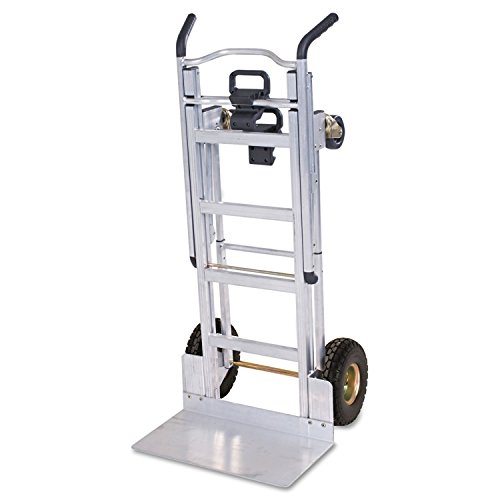
Best Overall: Convertible Steel Hand Truck
Convertible trucks, offered by Harper Trucks, Milwaukee and Magliner among others, flip the frame down to become a four-wheel platform. That lets one tool carry a stack of boxes in the upright position and a bulky item in cart mode. Look for a nose plate at least 14 inches wide, 10-inch pneumatic wheels, and a frame made from welded steel tube rather than stamped sheet metal.
Main trade-off: the folding mechanism adds weight and a pivot that needs oiling from time to time. If you only ever use upright mode, a plain frame is lighter.
Best for Apartments: Aluminum Folding Hand Truck
A folding aluminum truck collapses to about 4 inches thick and stores behind a door or in a trunk. Weighing 6 to 12 pounds, it is easy to carry up a flight of stairs. The downside is capacity: most are rated for 150 to 300 pounds, so they are best for cases of water, small appliances and boxes, not a refrigerator.
Best for Heavy Work: Heavy-Duty Steel Truck
A heavy-duty frame with a bent steel nose plate and solid-rubber or pneumatic wheels handles 800 to 1,000 pounds. This is what delivery drivers use. The nose plate is key: a thin plate flexes under a loaded keg or crate and wears faster than a thick one.
Best for Stairs: Stair-Climbing Hand Truck
These use a pair of rotating wheel clusters that roll over each stair edge. They cost more, but they save your back if you live in a walk-up. The load rating is typically lower, around 150 to 400 pounds for consumer models, because the climbing mechanism takes up room in the frame.
Best for Tall Items: Dual-Handle Sack Truck
Two vertical handles let two hands grip the frame at different heights, which gives better leverage with a tall box, water cooler bottle or beverage keg. The design is simple and tough. It does not convert to a cart, so it is a specialist tool.
How to Choose by Numbers
Size the truck on the heaviest regular load plus a margin, then match the wheels to the route. Per manufacturers’ spec sheets, ratings assume the load is centered over the wheel axle and the truck is tilted back about 15 to 20 degrees.
| Situation | Wheel type | Minimum rating | Why |
|---|---|---|---|
| Smooth garage floor, boxes | Solid rubber 8-inch | 300 lb | No flats, easy rolling |
| Gravel, lawn or curbs | Pneumatic 10-inch | 600 lb | Absorbs bumps, bridges gaps |
| Walk-up stairs, small loads | Stair-climbing or folding aluminum | 150-300 lb | Weight matters more than rating |
| Appliances | Pneumatic 10-inch with strap | 800 lb | Strap prevents tipping |
| Keg or water cooler | Dual-handle sack truck | 400 lb | Taller handles, better control |
Worked example: stacking four boxes of 55 pounds each puts 220 pounds on the truck. A 300 pound rated aluminum truck works, but the margin is thin, so a 600 pound steel truck is the safer pick if you will do it weekly.
What Wears First
- Tires: pneumatic ones go flat; keep a small pump in the garage or switch to foam-filled wheels.
- Axle bolts: check them seasonally, as wheels loosen over time.
- Nose plate: a bent plate cannot slide under loads cleanly.
- Handles: rubber grips split in cold weather and sun; replacements are cheap.
- Overloading: the most common reason a frame bends is stacking above the rating.
How to Choose a Hand Truck Step by Step
Hand trucks look alike, but small differences in wheels, nose plate and frame decide whether one is a pleasure or a chore. A methodical approach avoids buying either too much or too little.
- List your loads. Write down the three heaviest and the three most awkward things you expect to move: boxes, bags of soil, water bottles, appliances, kegs, equipment. This sets both the rating and the shape you need.
- Add a margin to the heaviest load. Pick a rating comfortably above it. Dynamic forces from stairs, curbs and thresholds can briefly exceed the static weight.
- Choose by route. Smooth floors allow small solid wheels. Lawns, gravel and curbs call for larger pneumatic ones. Stairs may call for a climbing model or a lightweight folding truck that is easy to carry.
- Pick a nose plate that matches your loads. A wide plate carries boxes and appliances. A narrow plate fits under a crate or keg. A thick plate handles heavy loads without flexing.
- Decide on storage. A folding aluminum model hides behind a door. A heavy steel truck needs a wall hook or a corner of the garage.
- Check the handle. A loop handle is comfortable for pushing and pulling. A dual-handle design gives leverage on tall loads. Taller people may want an extended or telescoping handle.
Who Should Skip a Hand Truck
- You only carry light loads. A rolling cart or a wagon may suit grocery runs or small boxes better, and it needs no balancing.
- Your lifts are rare. If the last time you needed one was a house move, borrowing or renting a truck is the cheaper choice.
- Your space is very small. If you have nowhere to put a steel frame, a folding aluminum model is the only comfortable option, and it may not carry enough.
- Your loads are wide and unstable. Large, flat items such as sheets of plywood or big mattresses do not sit well on a hand truck. A platform cart or a helper is a better match.
- Your route is mostly stairs with heavy loads. A stair-climbing model carries limited weight. If the loads exceed its rating, professional help is the safer course.
- You have limited grip strength or balance. Tilting a loaded truck takes control. A four-wheel platform cart is often easier for people who struggle with this.
Wheels, Nose Plates and Frames Explained
These three parts decide the character of a hand truck. Understanding them makes spec sheets easier to read.
Wheels
Pneumatic wheels use an air-filled tire and offer the best ride. They absorb bumps and protect fragile loads but can lose air and puncture. Foam-filled wheels look similar but never go flat; they ride a little harder. Solid rubber wheels need no care and suit smooth floors. Larger diameters roll over obstacles more easily, while small diameters fit in tighter spaces and cost less. Check the hub too: a sealed bearing or a bushing that spins on the axle without wobbling is a sign of quality.
Nose plates
The nose plate is the lip that slides under the load. Wider plates stabilize wide loads; narrow plates get under small ones. A bent steel plate with a thick gauge resists flexing. Some trucks have a fold-out extension, which helps with long items but adds a hinge that needs inspecting. Always check that the plate meets the ground cleanly when the truck is upright, because a plate that lifts at the front will not slide under the load.
Frames
Welded steel tube frames resist twisting and last longest. Aluminum frames are far lighter and do not rust, though they bend before steel does. Stamped sheet metal and plastic frames are cheaper and fine for light work, but they crack sooner under heavy use. Look at the welds where the frame meets the axle, since this joint takes the greatest stress.
Safe Technique for Loading and Moving
- Load heavy items at the bottom. Put the heaviest box against the frame, directly above the nose plate. Lighter boxes go on top.
- Keep the load close to the frame. The farther it sits from the frame, the more effort the tilt requires and the greater the tipping risk.
- Stack straight. Interlock the boxes where you can, and use a strap or a bungee to stop a tall stack from sliding.
- Tilt back to the balance point. At the right angle the load rides over the wheels and the handle feels almost weightless. If you have to push down on the handle, you are tilting too far.
- Use legs, not your back. Bend at the knees to get under the load and keep your back straight.
- Go slowly on slopes. Push uphill and lead downhill with the load behind you for control, or ask a helper to steady it. Never walk backward down a ramp with a heavy stack.
- Stop for obstacles. Lift the wheels over thresholds rather than trying to bump across them at speed.
When going up stairs with a regular truck, pull the load up one step at a time, lifting the wheels over each edge, and keep a helper below. When going down, keep the load above you and lower it step by step. A climbing model does the stepping for you, but you still control the pace.
Scenario-Based Picks From the Types Above
| Situation | Best match | Reason |
|---|---|---|
| Garden, mulch bags and potted plants | Convertible steel hand truck with pneumatic wheels | Cart mode for wide loads and large wheels for grass |
| Studio apartment with a fourth-floor walk-up | Aluminum folding hand truck | Light enough to carry, folds to store behind a door |
| Weekly deliveries or warehouse work | Heavy-duty steel truck | Thick nose plate and a high rating |
| Moving into a home with many stairs | Stair-climbing hand truck | Wheel clusters reduce the lifting on each step |
| Water coolers, kegs and tall boxes | Dual-handle sack truck | Two-hand grip for leverage on tall loads |
| Mixed boxes and one appliance | Convertible steel truck with a strap | One tool handles both jobs |
Maintenance, Lifespan and Common Problems
A hand truck is one of the longer-lived tools in a garage. Most trouble comes from a few parts you can replace.
- Flat or soft tires. Pump them up to the pressure printed on the sidewall, and check for slow leaks with soapy water. If the tire will not hold air, replace the tube or switch to foam-filled wheels.
- Wheel wobble. Tighten the axle nut and check for worn washers. A bent axle should be replaced.
- Folding joint stiffness. Clean the pivot and apply a drop of light oil. Never use it with a stuck lock pin, since the frame may collapse under load.
- Bent nose plate. Mild bends can be straightened with a vise. Severe bends or cracks mean the truck should retire from heavy work.
- Loose or split grips. Replace them with new rubber or foam grips; they slide over the handle tube.
- Rust. Sand surface rust, then touch up with paint. Keep the truck dry between uses.
A steel truck used at home can last decades with basic care. Aluminum folding models may last less time if used near their rating limit, because repeated flexing can crack tubing. Retire any frame that shows cracks in the welds, no matter how minor they appear.
Hand Truck Accessories and Add-Ons Worth Considering
Basic hand trucks do the job, but a few small add-ons make them safer and easier to use.
- Load straps. A ratchet or cam strap holds tall or awkward loads against the frame. Look for webbing with a clean edge and a metal buckle that does not slip.
- Bungee cords. Handy for stacked boxes, but not a substitute for a strap with heavy loads.
- Stair glides. Plastic or metal rails on the back of the frame let the truck slide up and down steps without catching, which reduces wear on both the frame and the stairs.
- Replacement tires and tubes. Keep one spare tube at home if you use pneumatic wheels. It saves you a trip when a tire goes flat on moving day.
- A small pump. A hand pump kept near the truck means tires are always inflated to the right level.
More Questions Buyers Ask
How tall should a hand truck handle be?
Most frames stand between 40 and 52 inches. A handle that reaches roughly your waist or lower chest gives comfortable control. Telescoping handles help when several people share the truck.
Can a hand truck carry long items like lumber?
Short bundles can be strapped to the frame, but long boards overhang and become unstable. A platform cart or a helper is the safer choice for anything much longer than the frame.
Is a stair-climbing hand truck worth it for a single move?
Probably not. The extra capability pays off with repeated use on stairs. For one move, a regular strapped truck and a helper cover most jobs.
What is the best way to store a hand truck?
Hang it on a wall hook by the frame, or stand it upright in a corner with the wheels against the wall. Folding models stand flat behind a door. Keep tires off wet concrete to avoid slow rot.
Should I buy a hand truck with a strap?
If you move tall or loose items such as appliances, a strap is a major safety feature. For stacked boxes, a bungee cord is often enough. Make sure the strap attaches to solid points on the frame.
Frequently Asked Questions
What size wheels do I need on a hand truck?
Ten-inch wheels are a good default for mixed use, since they roll over thresholds and curbs without much effort. Eight-inch solid wheels are fine for smooth floors, and large 13-inch pneumatic wheels suit rough ground.
Are pneumatic or solid tires better?
Pneumatic tires roll more smoothly and cushion fragile loads but can go flat. Solid and foam-filled tires never go flat, which makes them better for occasional use in a garage.
How do I use a hand truck without hurting my back?
Keep the load close to the frame, tilt it back only enough to roll, and push rather than pull on flat ground. On stairs, go one step at a time and keep your helper below the load.
Can one hand truck move an appliance and a stack of boxes?
A convertible steel truck with a strap and a 14-inch nose plate can do both. Just confirm the rating covers the heaviest appliance, and remove the strap before stacking boxes.
What is the difference between a hand truck and a dolly?
A hand truck is the upright two-wheel design with a vertical frame, while a dolly is a flat platform on four casters. Hand trucks climb curbs and stairs; dollies are steadier on level floors.
More from Amazon
Programs that pair well with the guide above. Offers and eligibility are set by Amazon and may change.
Free shipping on eligible items, Prime Video and more. Eligible new members can start with a free trial.
Start a Prime free trialAudiobooks and podcasts to listen to on the go. Eligible new members can start with a free trial.
Try Audible freeAd-free music streaming. Eligible new subscribers can start with a free trial.
Try Music Unlimited freeA free business account with business pricing and bulk-buying tools for work, shop or home office.
Create a business accountAs an Amazon Associate we earn from qualifying purchases.







Write Your Review
No reviews yet. Be the first to share your experience!